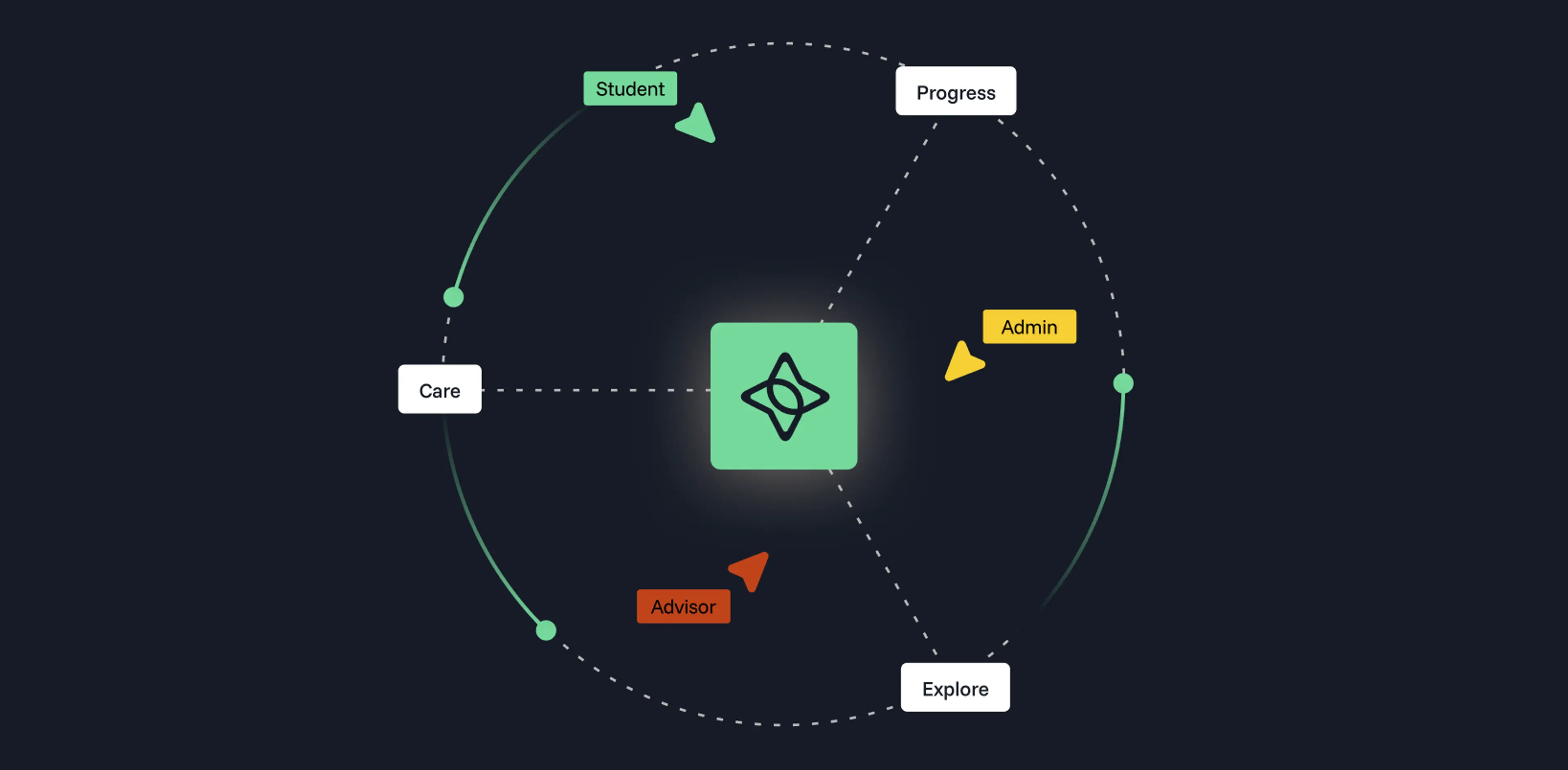
Across higher education, software plays a critical role in how institutions support students, coordinate work, and plan for the future. From admissions and enrollment to academics, finance, and advising, technology touches nearly every part of the student journey.
Yet many higher education institutions find that despite significant investment, their software environments remain difficult to evolve and hard to align across the entire campus. The challenge is rarely a lack of effort or commitment. More often, it reflects systems that were not designed to work together as institutional needs grew more complex and goals changed.
While software for higher education spans many categories, effective solutions tend to share a small set of foundational ingredients. These ingredients aren't individual features, but rather design choices that influence whether institutions can support student success, collaboration, and institutional sustainability over time.
1. Built in the Cloud and Made to Keep Changing
Many systems used by colleges and universities are called “cloud-based,” but not all of them are built the same way. Some were designed for legacy systems and later moved to the cloud, while others were built for the cloud from the very beginning. That difference matters.
Software that is truly cloud-native is made to improve over time. Updates happen regularly and automatically, systems can handle busy periods without slowing down, and schools benefit from new features without having to install or manage upgrades themselves. This means staff can spend less time keeping systems running and more time improving student experiences.
For schools that rely on a student information system and other connected tools, cloud-native design makes it much easier to adapt. Whether policies change, enrollment goes up or down, or new academic programs are added, the systems are better equipped to respond quickly and smoothly.
2. One Strong Platform Instead of Point Solutions
Over time, many institutions adopt tools to address specific needs, often one department or function at a time. Each tool may provide value, but together they can create a messy setup where systems don’t talk to each other and processes feel disconnected.
Platform-oriented higher ed software takes a different approach. Rather than solving problems in isolation, platforms are designed to share data, logic, and workflows across use cases. This creates a more consistent foundation for decision making, reduces duplication, and helps teams easily collaborate across departments.
By relying platforms and not point solutions, leading institutions can support more students without constantly adding new systems to manage. The result is a clearer, more connected way of working.
3. High Adaptability, Low System Risk
Higher education is constantly changing. Programs evolve, program requirements are updated, and new pathways emerge to support transfer, career readiness, and lifelong learning.
An API-based setup helps manage this change by clearly defining what each system is responsible for. Instead of systems being tightly tangled together or relying on manual fixes, they share information through reliable, predictable connections. That means one system can be updated or replaced without causing problems elsewhere.
When these systems are designed to work together thoughtfully, schools get the best of both worlds: flexibility to change and consistency they can rely on. Over time, this kind of setup makes it much easier to grow and adapt to new needs.
4. Continuous Improvement Without Disruption
Strong higher education software is designed so updates don’t undo the work institutions have already done. Settings, rules, and workflows stay in place as new features and improvements are released.
With upgrade-safe configuration, institutions can take advantage of enhancements without having to revisit approvals, rebuild processes, or reconfigure systems after every release. Updates happen on a predictable schedule, reducing surprises and making planning easier for both IT teams and campus offices.
This approach lowers the effort required to stay current and removes the hesitation that often comes with upgrading. This continuity supports long-term adoption and helps institutions maintain momentum.
5. Built-In Governance and Transparency
Higher ed software supports high-stakes decisions related to academics, financial aid, and progress toward completion. Governance and transparency are therefore essential ingredients.
Well-designed systems make it clear who can change what, how decisions are made, and how outcomes are produced. Role-based access aligned to institutional structures, auditability, and visibility into logic help faculty, staff, and leaders work from shared understanding.
When governance is embedded in the platform, institutions spend less time enforcing rules manually and more time supporting students.
6. Student Success and Experience as Key Outcomes
Student success, student engagement, and the student experience are not the result of a single tool or initiative. They reflect how well an institution’s systems and teams stay aligned.
When higher ed software is designed with shared architecture, clear governance, and connected planning, students receive consistent signals about their progress and options. Program requirements are applied reliably, academic planning reflects real rules, and advisors and faculty work from the same context.
In these environments, students gain access to accurate information in one place and can make informed decisions about their path, financial aid implications, and future opportunities. Engagement increases because uncertainty decreases, and the student experience improves because systems work together. Student success emerges not from additional effort, but from clarity built into the system itself.
7. Supporting Institutional Sustainability
Long-term institutional sustainability depends on how well software supports growth without increasing complexity. Systems that require constant maintenance, customization, or reconciliation consume resources that institutions cannot easily replace.
Modern higher ed software is designed to scale, connect systems, and improve insights without adding operational burden. This allows institutions to thrive, even as expectations increase and resources remain constrained.
A First-Principles Lens for Higher Ed Software
As colleges and universities evaluate higher ed software, it can be helpful to step back from feature lists and product categories.
Questions worth asking include:
- How does this system evolve as the institution changes?
- Does it connect teams and data across the campus?
- Will it reduce manual effort over time?
- How does it support collaboration, clarity, and shared decision making?
These questions help institutions focus on foundations rather than surface-level capabilities.
Looking Ahead
Higher ed software is most effective when it helps people work better together. While tools will continue to evolve, the essential ingredients that support alignment, progress, and institutional success remain consistent.
For teams starting that conversation, we’ve outlined five questions to ask when modernizing campus tech.
Institutions that focus on these foundations are better positioned to serve students, support faculty and staff, and move forward with clarity in a changing higher education landscape.
A practical starting point is assessing your institution’s readiness for cross-departmental collaboration.
If your team is exploring how to bring these ideas to life, reach out to us to look at how campuses are using Stellic to connect people, processes, and systems. We would love to walk you through what this looks like in practice and help you see whether it could be a fit for your students and your team.