The characteristics of a modern degree program audit system have come a long way. What used to be a simple administrative checkmark before commencement is now a strategic tool. Today, institutions and academic advisors rely on the degree audit to boost student engagement and self-service academic planning, increase transparency across campus, and streamline operational efficiency, ensuring that all degree requirements get met.
Finding one tool that can accomplish all of these goals is an important piece of the puzzle. But the system's potential also relies on a successful implementation process. In this article, we'll review what makes a successful modern degree audit system, and offer three key strategies for an optimal implementation.
Attributes of a Modern Degree Audit System
Trustworthiness
It almost goes without saying: anyone looking at a degree audit system needs to be confident that it's accurate, with correct program requirements and consistency between a student's displayed degree progress and their actual progress. It's important that everything built into the audit is clear and that users are aware of its importance. (rules, exceptions, etc.) keeps students, advisors, and staff on the same page regarding academic progress. Without trustworthiness, engagement with the tool is inevitably undermined (and with good reason), potentially having negative affects on degree completion.
One example of this: a course catalog indicates that a student can place out of the requirement for MATH 102 with a 4 or above on an AP exam. If Sharon earned a 4, but her audit tells her she still needs to take MATH 102, her faith in the audit has been undermined. She may be less likely to use the audit system moving forward. Cases like this are also why the catalog year an audit runs on matters so much to whether students trust the result.
Proactive and forward-looking
Today's degree audit systems go much deeper than a static report that's processed before commencement. They should be a dynamic resource that gives students real-time information about what they've completed, and what's still to come on their academic journey. Students should be able to easily take action and confidently plan their path forward when it comes to their degree requirements. A modern degree audit can facilitate this by highlighting prerequisites or allowing students to see the courses that count toward electives and minor requirements, without having to toggle between the catalog. That forward-looking view is also what sets an audit apart from a static academic record, a distinction we cover in degree audit vs. unofficial transcript.
Holistic
Course requirements are only one part of a student’s path to graduation. Research opportunities, declared programs, athletic obligations, and financial aid requirements all shape that journey, too. When this information lives in the same place, students get a true, holistic view of what they need to progress toward completion.
And a student’s academic journey doesn’t exist on its own. Sure, they're working toward degree completion, but that degree is often tied to post-grad goals, like building specific skills (e.g., JavaScript, editorial writing) or hitting career milestones such as a summer internship. To make the right choices for their goals, students need to see how credits and major requirements connect back to those broader ambitions.
Why does this matter in a degree audit? Because when students understand the full picture of what’s required for their degree and their future plans, they can make more informed, intentional decisions. They move through their studies with greater clarity, purpose, and confidence.
Easy to understand (read: student-first)
Many of today's students are accustomed to modern platforms for streaming video or social media. By having a degree audit tool that reflects this experience, students can better understand and engage with the information in a way that resonates with them. A clean and modern layout will also bolster academic advisors and staff to adopt the system and encourage students to use it as a resource.
Easy to build and maintain
A modern audit system should be all-around intuitive and simple to adjust on the backend. An intuitive and flexible experience, as well as accessible language, will prevent bottlenecks and miscommunication that arise if only a handful of staff know how to interpret and program the degree audit.
Actionable insights
Just like for students, a modern audit will also help institutions make informed decisions. For example, administrators might deduce which courses need additional sections or understand which electives in a program are consistently under-enrolled. If the system has audit and course data, stakeholders should be able to leverage this to best meet the needs of students.
Integrated with other student success tools
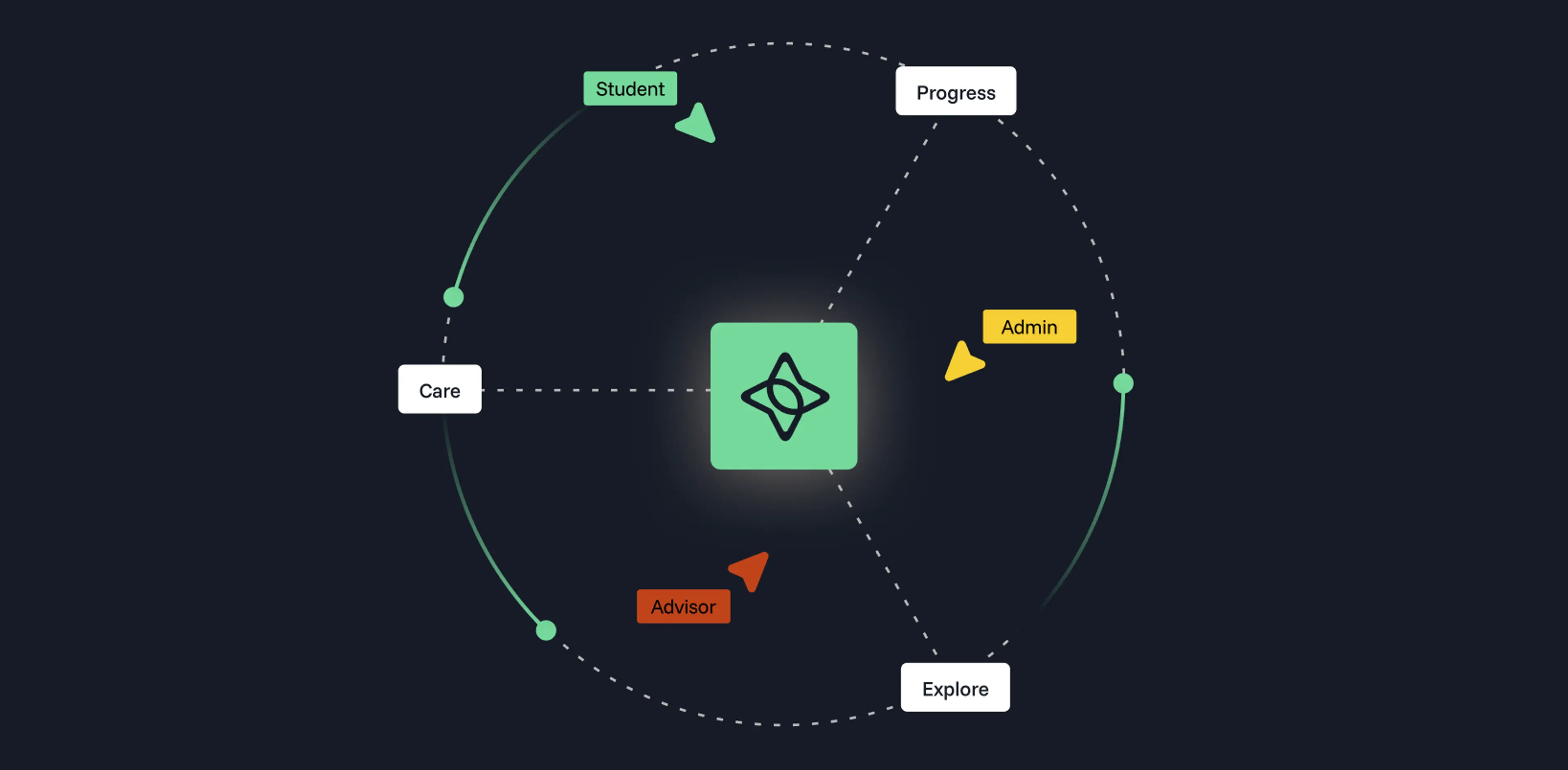
Degree audits are an important part of the broader student success ecosystem—but they’re only one piece. If the audit sits in its own silo as “just another tab,” even the best-designed experience will see lower engagement.
When a modern audit connects with other student success tools (advising platforms, course catalogs, or the LMS), adoption goes up. And with higher adoption comes a greater campus-wide impact. There are several ways to make this happen: integrating with other systems via APIs to pull in transfer courses, adding links to key tools directly within the audit, or building some of that functionality into the audit itself.
3 Key Components of a Smooth and Successful Launch
Now that know what makes a modern degree audit, let's dive into how to implement it. Below are components of a successful launch that we've learned through many implementations across a diverse set of institutions. While there's no perfect formula, we hope these guidelines can serve as a starting point for your implementation approach.
1. Setting the Stage
Determine your "why"
One of the most important first steps is getting crystal clear on why you’re pursuing a new degree audit. If you're a project leader, take the time to define what you want the audit to accomplish, and make sure you’re aligned with the other leaders involved. Are you aiming to boost student engagement? Improve transparency across departments? Reduce dependence on academic advisors? Often, it’s a mix of all three.
When project leaders explicitly identify what a successful implementation looks like, that clarity becomes the backbone for major decisions throughout the process. It also helps offices and stakeholders understand the bigger picture, which builds buy-in and cooperation around shared goals.
Be candid about your “why” with your technology partner and any campus stakeholders involved. Share your success criteria as specifically as possible.
Skipping or rushing through this step may still get the software implemented, but it won’t guarantee the long-term impact you’re aiming for.
Never skip discovery
Discovery is the process of bringing your institution's nuances to light: how the advising process works, the use of catalog terms versus entry terms, which offices may be change-reluctant, and so on.
While these nuances are second nature to you, your vendor needs to understand them just as well.
💡 Stellic tip: Consider describing the best and worst implementations you've had to help you and your technology partner avoid past pitfalls.
Get buy-in
The degree audit is one of the most cross-functional systems on campus. To achieve both short-term efficiency and long-term value, you’ll need more than simple sign-off from stakeholders. You’ll need their true buy-in.
As with any software implementation, adopting a new degree audit often means letting go of certain past practices. Setting expectations early can help. For example, while you won’t need to overhaul your entire curriculum, you may need to rethink how it’s written or move away from terminology carried over from an older tool or process.
When stakeholders are willing to compromise and help remove blockers, the project moves forward much more smoothly.
💡 Stellic tip: Start by building strong buy-in with a small group of campus leaders. As they become champions for the project, they can communicate the change to a wider group of peers, explaining in a contextual, trusted way why the new degree audit matters and how it benefits the campus.
Setting the right timelines
Consult with your technology partner and work backward from a desired launch date. It's best practice to set reasonable milestones and inform stakeholders and staff when their participation will be needed far enough in advance, making sure it doesn't conflict with important points in their calendar. For instance, if faculty will be involved in testing, then it's best to take into account events like midterm examinations or grading deadlines.
Minimize time-to-value & celebrate short-term wins
Excitement for a project can wane as implementation goes on (think marathon, not sprint). To maintain the excitement and momentum as staff are working toward launch, it can be very impactful to show wins in the short term.
💡 Stellic tip: Narrow the scope of your implementation to a group on campus that needs the tool the most (call this your alpha-launch population). Record testimonials during testing and alpha-launch – especially from students – and then share the sentiments with other constituents to demonstrate the tool's impact. It's much more powerful to generate enthusiasm through user testimony than through a sustained promise from a vendor.
2. Technical Success
Technology partners can't design an optimal implementation plan without understanding your resource constraints, unique requirements, and current processes. Reviewing these attributes and limitations early on can remove unnecessary blockers and significantly accelerate the time to value.
Embrace and communicate constraints
Constraints don't have to be lethal or taboo. Candid conversations about the “good-to-know” information will build trust and minimize the risk of future problems. Does IT only have 2 hours a week to dedicate to this project? Is the project manager new to your institution? Whatever they are, share the constraints with your vendor. They have probably seen similar scenarios and can find workarounds with you.
Leverage existing work
Other campus projects may have recently required data pulls that you can reuse in this implementation. Informing your technology partner about those data pulls and collaborating with them can save you some time and reduce the project's dependency on the IT department.
Test with fresh eyes across campus
Recruit folks for testing who have never seen the platform during implementation. We've found that very quickly they can identify problems that the project team has missed. Typically, they ask questions that you may have thought were very self-explanatory as well. Involve advisors and administrators yes, but we really recommend involving some students in the testing process too.
3. Readiness & Change Management
So your integrations are all set and testing is looking solid. As you shift towards launch, here are a few strategies that can help prepare your campus.
Use the “train the trainer” model
Administrators and staff tend to respond better to training when they come from someone they trust (from the institution). When issues, questions, and user errors come up, advisors and staff are much more likely to reach out to someone who shares their email domain rather than a vendor.
Inspire, not train
We say “train” but we really mean “inspire”. And that framing can really make a difference because tech fatigue is very real for advisors and faculty.
Alternatively, we suggest you identify common pain points that your constituents face in their current work. Then you can position the training sessions as learning new ways to solve those problems and do their jobs more effectively – the degree audit technology is the means to bridge that gap.
Establish a strong communication plan to students
This process starts with aligning the overarching message to students. We recommend thinking beyond features and choosing 3-4 compelling value adds the audit will bring students. Why should they engage with this tool? When students clearly understand what's in it for them, they're more likely to get started more quickly and independently.
After nailing down the positioning for your student population(s), you can think more about the right channels to spread the word. We've seen it's important to contextualize the approach based on the campus culture of how students absorb information. Perhaps it makes the most sense to introduce the tool in a student's advising session, or maybe students prefer to watch an overview video on their own. In many cases, emails are still tried and true. Whatever they are, we've seen that multiple touch-points rarely hurt.
If you're unsure, you might want to ask around with other factions on campus, such as advisors or department heads, and especially those who have just communicated information to students. Ask your technology to collaborate with you as well – they can likely share strategies and resources that you can leverage during your launch.
Measure success
Stakeholders want to know that the time and effort they poured into preparation and testing made a difference. Share key results in the context of “the why” that you described at the beginning of the project, including progress toward achieving those goals . It's often rewarding to highlight student-based metrics, like adoption or active time in the platform, and to note how these correlate with success . Weaving in qualitative stories or quotes from students can bring those numbers to life.
This kind of visibility also has implications for financial aid compliance, where audit accuracy directly affects institutional risk.
Get vendors to commit to fixes and enhancements
Technology partners weigh your enhancement requests against other product priorities. And without context, your enhancement may not be deemed as crucial as others in the queue. Consider using this framework to give developers the background they need to prioritize it in a future release: “If [insert request here] isn't fixed, [insert negative result], and it creates [insert problem] for us downstream.”
Picking the Right Platform for You
The complexity of today's higher ed space has made traditional degree audit processes and systems in need of a refresh. Still, that transition comes with a host of factors to consider. If you're new to the concept, start with our explainer on what a degree audit is and how to read one.
If you’re in the early stages of that work, a degree audit assessment can help you understand where your current system stands.
Maintaining stakeholder alignment, setting expectations, and executing a robust testing strategy go a long way. Ultimately, a key component of a seamless transition and long-term success involves choosing the right provider with whom to partner. Stellic takes a modern and student-first approach to the degree audit in order to help campuses realize the best possible experiences and outcomes. Our team of implementation experts offers strategic guidance to get students, advisors, faculty, and staff up and running – minimizing the time on the path toward your strategic goals.
Click here to learn more about our approach and see how we could help transform the student and advisor experience, facilitate optimal processes, and more.