Nearly every institution has a registration system. Whether it lives inside Ellucian, Workday, PeopleSoft, or another SIS, the technical capability to enroll students in courses already exists. And yet, students still dread registration week. Advisors brace for a flood of panicked emails. Registrars know the first day of enrollment will surface problems that should have been caught months earlier.
The pain points are familiar. Students plan their semester in spreadsheets, degree audit PDFs, or scribbled advising notes, then switch to a separate portal when their time ticket opens. They juggle multiple browser tabs, cross-referencing catalog descriptions, prerequisite lists, and section availability. They discover at the worst possible moment that a hold exists, a prerequisite was never completed, or the class they need is already full.
In 2026, good class registration is no longer just about enabling web enrollment. It is about confidence, clarity, and continuity. Students should enter registration knowing exactly what they are signing up for, why each course matters, and have contingency plans in place if their first choice is unavailable. Ideally, advisors don't spend their enrollment week firefighting, because issues were surfaced and resolved upstream.
What it really comes down to is this: Good class registration is not a single moment. It is the natural outcome of strong planning, clear requirements, and proactive guidance.
Here are some key elements of good registration in 2026:
1. Registration as the final step of semester planning, not a separate process
Today, most students experience semester planning and registration as two disconnected activities. They meet with an advisor, jot down course codes, maybe build a tentative schedule in a spreadsheet or a third-party app. Then, when their enrollment window opens, they re-create everything from scratch in the SIS. They type in CRNs, double-check section numbers, and hope they remembered everything correctly.
Problem 1: Data Entry
- Impact: Students type course codes manually, risking typos and wrong sections.
Problem 2: Human Error
- Impact: Under time pressure, students register for the wrong section or miss required courses.
Problem 3: Context Switching
- Impact: Students abandon registrations mid-process due to mental fatigue from switching between tools.
Problem 4: Disrupted Decisions
- Impact: Seats disappear in real time, forcing rushed changes to carefully considered plans.
In 2026, good class registration looks different. The same platform students use to build multi-term plans — Fall 2025 through Spring 2027 — is where they also register when enrollment opens. There is no re-entering CRNs. No copy-pasting course codes. No switching between a degree audit screen, a PDF catalog, and a separate registration portal.
2. Students should know about issues before registration opens
Here is a scenario that plays out at institutions every semester: A student opens the registration portal, confident they are ready. They add their planned courses. They click submit. And then... an error. A prerequisite they thought they completed was never recorded. An advising hold they did not know existed blocks enrollment. A required course conflicts with another section they need.
The 2026 standard is clear: by the time registration opens, students should have already seen and resolved any blockers. Issues to surface early include:
- Missing prerequisites (e.g., a math course required before the next sequence)
- GPA-based course restrictions
- Financial, conduct, or advising holds
- Time conflicts between lab and lecture sections
- Duplicate course attempts or already-satisfied requirements
Alerts should be actionable, not cryptic error codes. Each issue should explain what it is, why it matters for graduation, and concrete next steps: “Meet your advisor to resolve your advising hold,” “Submit a prerequisite waiver petition,” or “Choose a different section of CHEM 102 to avoid a time conflict.”
3. Good registration software helps students find the best alternative options
A high-demand course reaches capacity within minutes of registration opening. A student refreshes, hoping for a spot. Nothing. They open the catalog, search for alternatives, and start guessing. Will this other section work? Does it count for the same requirement? Will it delay graduation?
This trial-and-error approach is how most students experience closed or waitlisted courses today. It is stressful, inefficient, and often leads to suboptimal schedules.
In 2026, class registration software can do some of the thinking for students. When a desired section is full, a good system will suggest:
- Other sections of the same course that fit the student’s schedule
- Equivalent courses that satisfy the same requirement
- Recommended substitutions that keep the student on track for their target graduation term
- Online classes as an alternative, including those with automated video link delivery for virtual learning
- Training courses or professional development offerings that may fulfill elective or skill-building requirements
Modern class registration software also enables waitlist management for full classes. When a class is at capacity, students can join a digital waitlist, and the system will automatically notify them when a spot opens. This allows students to complete their sign ups quickly and efficiently, streamlining the enrollment process and reducing uncertainty.
“Best alternative” doesn’t mean just any open class. It means courses that still apply to the student’s specific degree plan, respect prerequisite sequences, and preserve progress toward completion. Students should see visual explanations of how each alternative affects their time to degree, term load, and remaining requirements.
4. When degree planning is effective, registration can be fast and painless
Preparation should be rewarded with ease. If a student has an approved plan, no holds, and no conflicts by the time their enrollment window opens, the registration experience should be fast and frictionless.
The ideal 2026 flow looks like this:
- Student logs in
- The courses they planned weeks earlier are displayed
- Student confirms and submits enrollment with minimal clicks
- Real-time feedback confirms enrollment or waitlist status
- Automated reminders notify the student if anything changes
There is no re-checking prerequisites that were already validated. No redundant degree audit scans. No repeating steps already completed during planning.
Importantly, “fast” does not mean rushed. Speed is the result of decisions made upstream, with advisors, during planning sessions, using degree audit tools. The registration moment simply executes choices that were already considered carefully.
5. Good registration software ensures students register for the right classes
But what does taking the “right classes” mean in higher education? Students are looking for classes that meet the following criteria:
- Requirement fulfillment: Courses count toward major, minor, and core requirements
- Catalog year alignment: Classes respect the student’s catalog year rules
- Pathway alignment: Courses support chosen tracks (pre-med, teacher licensure, transfer pathways) and are managed by schools using class registration software to ensure alignment with institutional pathways and requirements
- Schedule sustainability: Workload is realistic and balances course difficulty
“Correctness” alone is insufficient. Students also need to understand why each course matters. A student registering for “MATH 241” should see that it satisfies “Major Core: Calculus II” and contributes 3 credits toward their 120-credit degree. This visibility reinforces progress and motivation.
Good registration software also prevents wasted credits. If a student adds a course that will not count toward any declared program or potentially delay graduation, the system should flag it and prompt advisor review. Institutions using real-time degree audits during registration often speed up time-to-degree because students can avoid unnecessary credits.
6. Confidence as the real measure of registration success
Reframe how you measure registration success. Instead of only tracking how many students registered on day one, ask: Did students feel prepared? Did they understand their schedules? Do they trust that their courses move them toward graduation?
Confidence shows up in practice:
- Students understand how their schedule supports on-time graduation
- They know backup options if plans change mid-term
- They trust that no hidden requirement will surprise them later
- Advisors spend enrollment week having productive conversations, not crisis management
Consider a first-generation student registering for Fall 2026 at a community college. Using an integrated platform like Stellic, they see their transfer pathway, confirm that every course counts toward their associate degree, and walk into the term knowing they are on track to transfer to a four-year institution in 2027. That is confidence. That is the outcome good registration software creates.
7. Enhancing security and compliance
For institutions evaluating class registration software, security and compliance are foundational requirements. Modern platforms manage highly sensitive data at every stage of the registration journey, from student records to enrollment details, making robust, customizable security essential.
Today’s leading registration systems are designed to reduce manual data handling, lower the risk of unauthorized access, and protect sensitive information across the entire registration lifecycle. Centralizing registration workflows within one secure platform helps institutions maintain stronger oversight while minimizing operational risk.
Ultimately, a secure and compliant registration process is about trust. As online registration becomes the norm, institutions need software that safeguards data, simplifies administration, and delivers a seamless experience for every user. Investing in advanced security and compliance capabilities is essential to protecting the community an institution serves.
In 2026, good registration feels predictable
When class registration works well, it can almost feel...well, boring. Students log in, confirm their schedule, and move on with their lives. No drama or frantic emails to advisors.
That predictability is not the absence of sophistication. It's the result of sophisticated systems working together upstream. Seamless flow from planning to enrollment. Early visibility into issues. Academically sound alternatives when courses fill. Fast execution for prepared students.
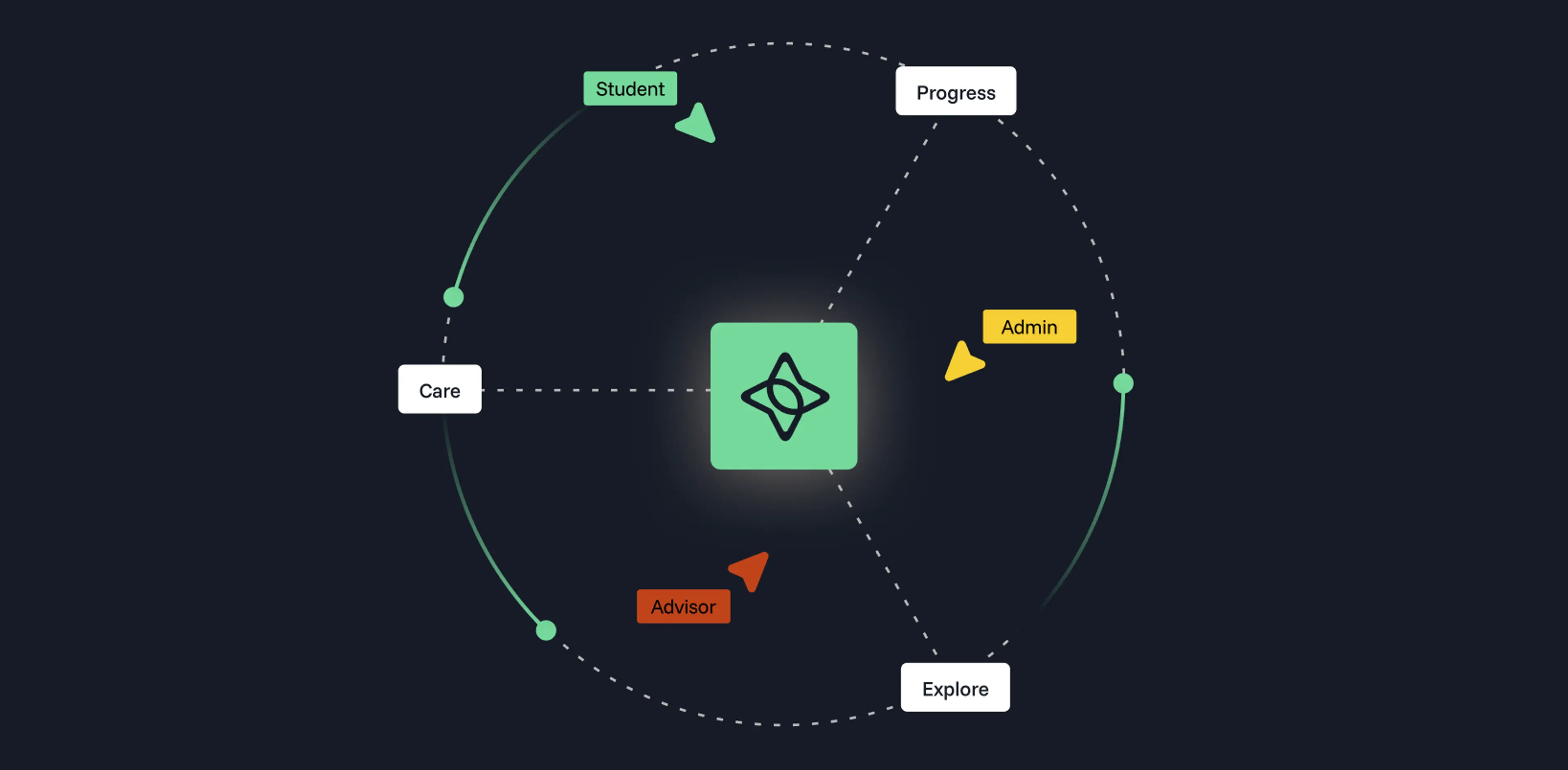
Registration is no longer an isolated event. It is the visible tip of a much larger, integrated planning and advising ecosystem. Class registration software can integrate with other software and web-based applications, enabling institutions to manage events and streamline workflows across platforms for a unified experience.
For institutions, this translates to improved retention, reduced time to degree, more effective use of advising resources, and better support for transfer, adult, and nontraditional learners. For students, it means walking into each term with confidence instead of relief.
When registration is done well, students don’t feel relieved it’s over. They feel confident moving forward.
The institutions that invest in integrated planning and registration now—in platforms like Stellic—will be best positioned to serve modern learners in 2026 and beyond. Book a demo to see real-world examples from partner institutions already supporting over 1 million students.
Key Takeaways
- Registration should be the final step of planning, not a separate process entirely. When semester planning, schedule building, and enrollment flow together, students avoid data re-entry, errors, and last-minute confusion.
- Issues should surface weeks before registration opens. Prerequisites, holds, and degree conflicts discovered at enrollment time cause preventable scrambles. Early visibility transforms registration into a confirmation step, not a discovery process.
- Smart alternatives keep students on track. When first-choice courses fill, the system should suggest academically sound backups that still align with degree requirements and graduation timelines.
- Preparation should be rewarded with speed. Students who resolve issues early deserve a fast, seamless enrollment experience—minimal clicks, no redundant checks.
- Confidence is the real success metric. The goal is not just completed enrollments; it’s students who understand their schedules, trust their progress, and move forward without anxiety.
- Class registration software enhances the experience for registrants by providing user-friendly registration forms, integrated and secure online payment options, and empowering students to reschedule their own classes independently, improving flexibility and autonomy.
- Accessible and affordable registration is enabled through payment plans, discounts, and promo codes. Secure online payment processing is essential for handling tuition fees, deposits, refunds, and installment-based payment plans, while also managing discounts and promo codes to reduce barriers and incentivize sign-ups.
Evaluating class registration software for your institution
If you are reviewing class registration software for a university or community college, here is a practical checklist for 2025-2026 evaluations:
When evaluating class registration software, it is crucial to identify the key features that will best support your institution’s needs. The software should support continuing education programs, offering flexibility for professional development, adult learning, and diverse course offerings. Robust date handling is essential for managing class schedules, events, and seamless integration with other systems. Consider how management software can streamline administrative tasks, improve communication, and integrate with your existing systems for a unified experience. Real-time analytics are vital, enabling administrators to identify popular courses, forecast future staffing and resource needs, and make data-driven decisions about course offerings. Be sure to align your software selection with the business needs and goals of your institution to ensure the platform supports both current operations and future growth.
Core Software Evaluation Criteria
- Degree audit depth: Does the system handle complex program structures, dual majors, and catalog year rules?
- Transfer pathway support: Can it evaluate transfer credits from multiple institutions and apply them accurately?
- SIS integration quality: How does it connect to Banner, Colleague, Workday, or PeopleSoft? Is data sync real-time?
- User experience: Is the interface intuitive for both students and advisors? Does it reduce manual data entry?
- Analytics capabilities: Can administrators see enrollment patterns, bottleneck courses, and at-risk cohorts?
- Scalability: Will it perform well for 10,000+ students during peak registration periods?
Questions to Ask Vendors
- How do you handle catalog year changes for existing students?
- What is the prerequisite enforcement logic? Can it handle exceptions?
- How are cross-listed courses and co-requisites managed?
- What happens when a student changes programs mid-stream?
- What security certifications does the platform hold?
- Are there audit trails for schedule changes and requirement overrides?
- How does role-based access work for registrars, advisors, and department chairs?
- Does the system support registrar and advising workflows without duplicating data entry?
The right software for your institution will address these criteria while reducing administrative burden. Integrated payment processing, automated reminders, and streamlined process workflows matter—but in higher education, degree logic and academic accuracy are non-negotiable.
To see how Stellic approaches registration specifically, visit our registration page.