What We Heard at AACRAO 2026: A Moment of Pressure and Possibility
Our team's takeaways from the 111th AACRAO Annual Meeting in New Orleans.
This moment in higher education feels like one of meaningful change. That was true when we wrote those words earlier this year in our e-book, and it was even more apparent walking the halls of the 111th AACRAO Annual Meeting in New Orleans last week.
Over 1,800 registrars, enrollment leaders, IT directors, and student success professionals came together for four days of sessions, roundtables, and the kind of honest hallway conversations that only happen when a community is working through something together. Nobody shied away from naming the challenges. But what stood out most to our team wasn't just pressure, but the creativity and commitment showing up alongside it.
Here's what we kept hearing at the conversations at our booth and happy hour, and why it gives us hope about the road ahead.
AI Is Finding Its Footing in Higher Ed
Many sessions had "AI" in the title, as you'd expect them to these days. But what made this year's conversations feel different was a growing maturity in how people are thinking about it.
The vague, aspirational questions ("What will AI mean for higher ed?") are giving way to more grounded ones ("Where in our workflow would this make the biggest difference, and what would we need to be true about our data before we try it?").
Gordon DeanProduct Manager, Stellic
The sessions that drew the biggest crowds went deep on practical applications: using AI to streamline transfer credit evaluation and transcript processing, deploying agents to surface at-risk students earlier, and applying machine learning to enrollment analytics so decisions are informed by patterns rather than instinct. AACRAO signaled the importance of this shift by hosting a post-conference invitational symposium on the Future of Credential Evaluation.
EDUCAUSE landscape research has highlighted AI's potential to transform administrative workflows, but only when the underlying data is clean, connected, and accessible. The institutions making early progress aren't chasing the flashiest tools. They're investing in connected systems first, so that when AI is layered in, it has something reliable to work with.
What Counts as a Credential Is Expanding
One of the more energizing threads was the broadening conversation around credentials. Stackable credentials, competency-based education, prior learning assessment, and microcredentialing all had dedicated sessions with strong attendance. Graduate programs came up repeatedly as institutions rethink degree structures for working professionals who need flexible, accelerated pathways.
For registrar teams, this means the systems that track, evaluate, and award credit need to evolve alongside the credentials themselves. Several sessions showcased institutions already doing this well, modernizing articulation workflows, improving transfer benchmarking, and giving students earlier visibility into how their credits apply. The common thread was connectivity. When information flows between departments and systems, staff can focus on evaluating credentials accurately rather than reconciling data across disconnected tools.
Institutions Are Getting Intentional About Prioritization
If there was one theme that connected almost every conversation we had, it was this: how do you decide what to focus on when everything feels urgent? According to a 2025 report from Tyton Partners, 42% of academic advisors and administrators cited high caseloads as their top advising barrier, followed closely by lack of interdepartmental coordination at 32%. Those numbers hit home in more than a few rooms.
But the tone was solutions-oriented, not resigned. Presenters shared real frameworks for triaging competing demands, and attendees talked candidly about what they've deprioritized and why. The recurring insight was that the institutions making progress aren't necessarily the ones with the biggest budgets. They're the ones being deliberate about where they invest their time and building systems that reduce the manual work filling up a day without moving anything forward. When technology handles the routine, staff have capacity for the work that requires human judgment, relationship, and care.
So much is feeling urgent for schools. In the sessions and conversations, people are trying to understand where to best prioritize. That's a big part of where I think we (Stellic) can help: to take the manual, repetitive work off the table so teams can focus on what actually matters for students.
Kasey SmithPartner Delivery Lead, Stellic
Policy Is Moving Fast, and Adaptability Is the Response
State legislatures are passing transfer policies, boards are issuing new directives, and leadership teams are announcing curriculum changes at a pace that can feel relentless. For registrar and transfer offices, these decisions create real downstream work, often on tight timelines with tools that weren't built for rapid change. The gap between what gets decided at the top and what teams can operationalize on the ground was a recurring theme.
What was encouraging was the number of institutions we spoke with sharing how they're closing that gap. Some are investing in platforms flexible enough to absorb policy changes without starting from scratch. Others are restructuring teams so that compliance work doesn't crowd out the higher-impact work of supporting students. The shift is from reactive to adaptive, driven by people who are tired of rebuilding and ready to build something that lasts.
The Community Itself Was a Theme
Woven through the week was something harder to categorize but impossible to miss: a genuine sense of shared commitment. Registrars and enrollment professionals sit at the operational center of nearly every institutional process, and the past several years have asked a lot of them. The sessions that explored perseverance and sustained momentum weren't filler. They reflected a community choosing to lean into a real stretch together rather than retreat.
There's real pressure in higher ed right now, but communities like AACRAO show that people aren't retreating from it. They're showing up for each other, sharing what works, and building toward something better together.
Dixie WilliamsPartner Strategy Lead, Stellic
The Opportunity Inside the Constraint
Zoom out and a pattern emerges. Institutions are being asked to deliver more without receiving more, and the pressures are converging all at once. And yet the response we saw at AACRAO was intentionality and support.
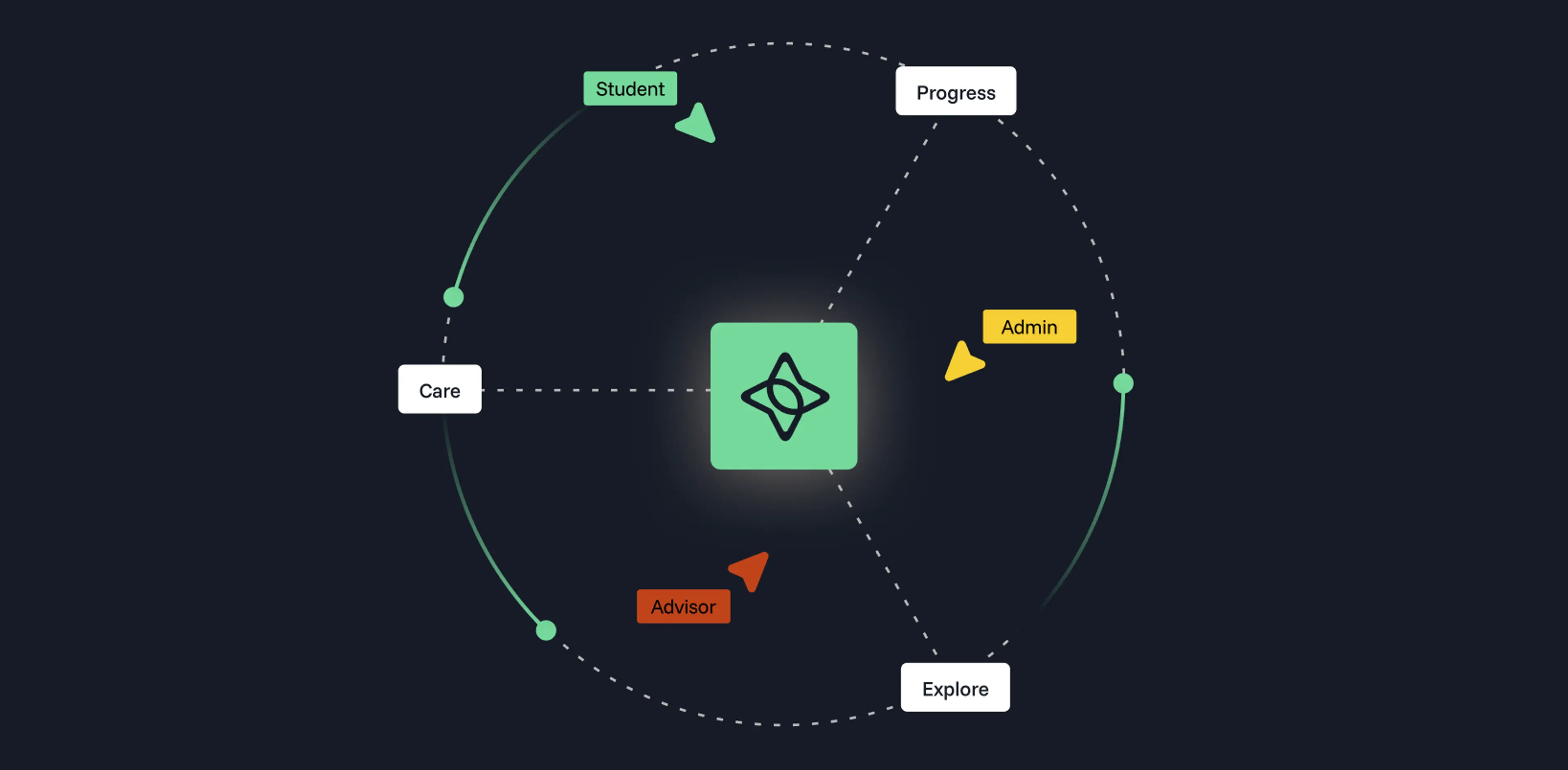
The conversations that resonated most came back to a consistent set of ideas. When systems are connected, staff can focus on students instead of on workarounds. When information is clear and shared, students can make confident decisions about their paths. When data flows across departments, leaders can act strategically rather than reactively.
That's the work we're focused on at Stellic. Software doesn't solve every challenge, but it can make it possible for people to work better together. And if AACRAO 2026 showed us anything, it's that the people doing this work are more than ready to do exactly that.
If any of these themes resonate with what you're seeing on your campus, we'd love to continue the conversation.