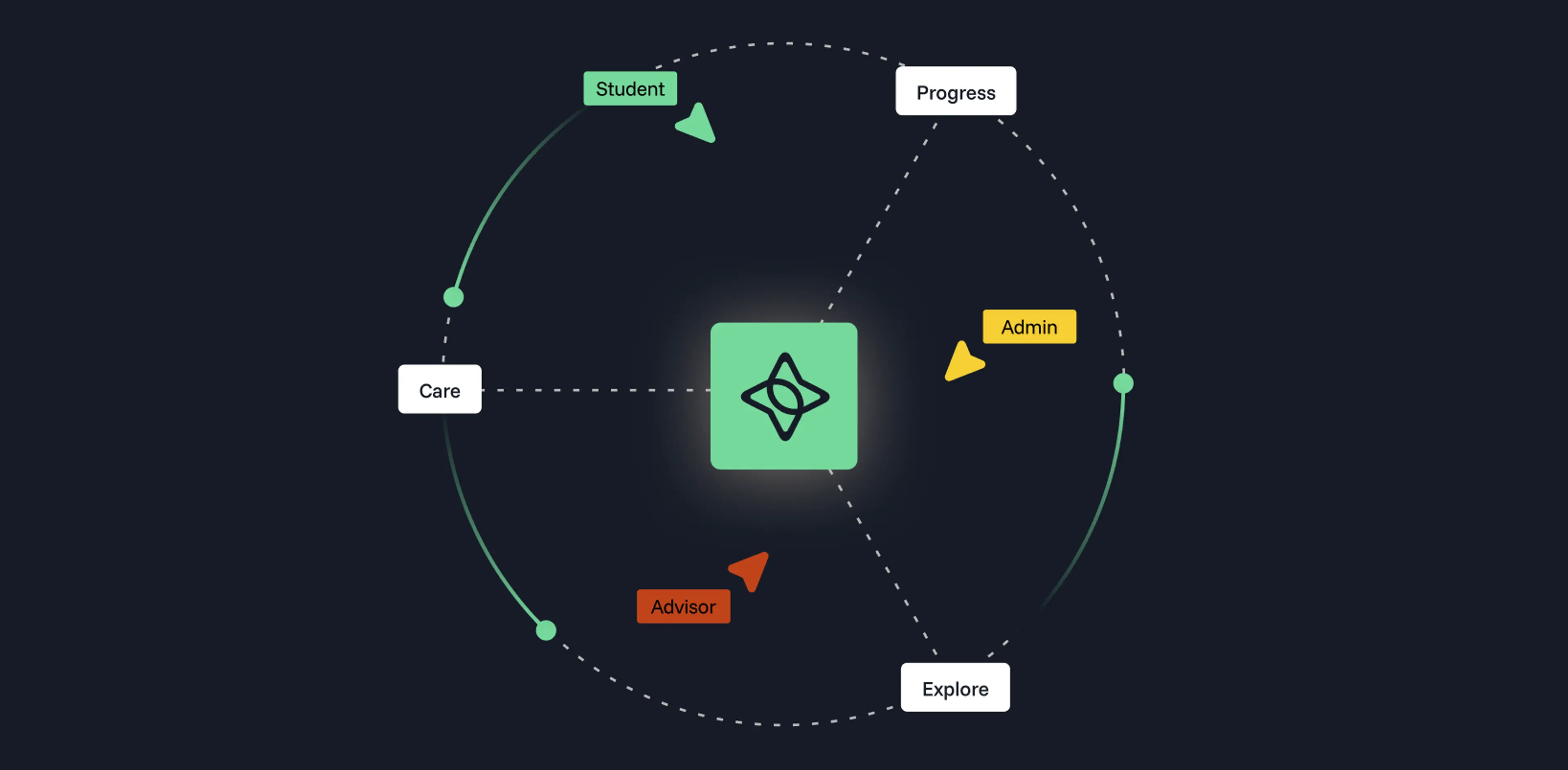
Advisors are juggling too many tools. That was the takeaway from a live poll during our May webinar, where the majority of attendees said their advising teams are using four to ten different systems to support students. Separate tools for appointments, notes, early alerts, degree planning, and more. The result: advisors spend more time managing systems than they spend with students.
Brian Mikesell, VP of Solutions Engineering at Stellic, and Harsha Prakki, Product Delivery Lead for Care, walked through what Stellic Care looks like in practice and where it's headed next. Here's a recap of the key themes.
Advisors are spending most of their time on transactional tasks
A second poll asked attendees what their advising sessions are most commonly about. Class selection and degree progress topped the list by a wide margin. Brian tied this to Educause and NACADA research showing that advisors spend roughly 27 of a 30-minute appointment helping students build schedules, run degree audits, and evaluate what-if scenarios. That leaves about three minutes for the conversations that build personal connections: career goals, emotional wellbeing, sense of belonging.
When students have self-service tools to handle the transactional work on their own, advisors can use that time differently.
What students and advisors see in Stellic Care
Brian demoed the student and advisor experiences side by side, using real production environments. A few highlights worth noting:
Students log in to see their degree progress, upcoming appointments, and a notification feed modeled after social platforms they already use. They can message their advisor, book appointments with pre-meeting questions built in, and view shared notes from previous sessions. About 32% of student sessions happen from a mobile device, and Stellic is designed to work without a separate app download.
For advisors, a homepage launched last year puts pinned reports, upcoming appointments, open concerns, referrals, and mentions all in one place. Saved reports auto-refresh nightly, so advisors can see which students are at risk, who has planning issues, or who hasn't logged into Canvas recently. One feature that got a strong reaction: advisors and students can resolve concerns with a single click, complete with green celebration balloons.
Brian also showed how advisors who double as faculty can flip between their advising caseload and their class roster with a single toggle. From the class roster, they can filter by LMS engagement or grades and send targeted outreach without leaving Stellic.
Partners are moving from reactive to proactive advising
Harsha shared that one of the biggest shifts she sees with Care is institutions moving from reactive to proactive support. Before Care, outreach typically happened after a student was already struggling. With Care, because LMS data, degree progress, and planning activity feed into advising workflows, teams can act on early signals and automate outreach before situations escalate.
She also emphasized the importance of standardization during implementation. Note templates, note tags, and saved reports help institutions build consistency across advising teams, making it easier to track open concerns, monitor caseload distribution, and identify students who may not be receiving follow-through.
What's coming next
Brian previewed several features in development. Queuing allows offices to manage walk-in traffic with a virtual kiosk, including a QR code students can scan from their dorm to join a queue remotely. "Book With Any Advisor" lets students pick a time slot and get matched with whoever is available, similar to a walk-in model but with scheduled infrastructure behind it.
On the AI side, an automated notes summary feature will give advisors a sentiment analysis of a student's full note history, which is especially useful when a student has hundreds of notes and an advisor has five minutes between appointments. Brian noted that some schools had been copying and pasting notes into external AI tools, which raised campus security concerns and made the case for building this directly into the platform.
Care Analytics, already in early use at the University of Delaware, lets staff ask natural language questions about advising data. Brian demonstrated asking how many kudos were created in the last 90 days and on which days, which revealed that the University of Delaware's Kudo Friday tradition was clearly visible in the data.
Further out, Stellic is exploring meeting transcription, where advisors could record appointments (with student permission) and get AI-generated summaries posted as notes. The goal: let advisors be active listeners instead of splitting attention between the conversation and their keyboard.
Watch the full recording
The full session, including the live demo and audience Q&A, is available above. If you're thinking about what your advising stack could look like next term, we'd love to talk.