Starting at a community college and finishing at a four-year university is one of the smartest financial moves in higher education, and it works beautifully when the credits line up. The trouble is that they often do not. A student can spend two years earning an associate degree, transfer to their dream university, and discover that a chunk of the coursework they paid for does not count toward the bachelor's they came for. If you are planning a 2+2 path, the single most important thing you can do is plan your credits around the university you intend to transfer to, not just the associate degree you are earning now, and start doing it in your very first term.
This checklist walks through how to protect your credits on a community-college-to-university path, from choosing your transfer target early to using articulation agreements, so you arrive as a junior instead of a very expensive sophomore.
Why credits get lost on the way to a bachelor's
The credit-loss problem is real and well documented. A U.S. Government Accountability Office study found that students who transferred between 2004 and 2009 lost an estimated 43% of their credits on average, and the losses were especially consequential for students moving from community colleges into the four-year system. Every lost credit is time and money spent twice.
Credits usually go missing for predictable reasons. A course may not have an equivalent at the receiving school, it may transfer only as a general elective rather than toward a major requirement, or the student may have taken it before knowing which university they were aiming for. The encouraging news is that nearly all of these causes are avoidable with early planning, which is what the rest of this checklist is about. If you already transferred without finishing the associate, reverse transfer is the process for going back to claim it.
Pick your transfer target before you pick your classes
The most valuable move a community college student can make is to choose a target university, or a short list of them, as early as possible, ideally before registering for a second semester. Everything downstream gets easier once you know where you are headed.
With a destination in mind, you can look up that university's admission requirements for transfer students, the prerequisite courses for your intended major, and its published minimum credit thresholds for junior standing. Many students assume they will figure out the destination later and focus only on finishing the associate degree. That sequence is backward, because an associate degree optimized for one school can leave gaps for another. Knowing your target lets you shape your two years around the exact requirements that will greet you on the other side.
Use articulation agreements as your roadmap
Articulation agreements are formal partnerships between community colleges and four-year universities that guarantee how specific courses will transfer, and they are the closest thing to a credit-loss insurance policy that exists. If your community college has an articulation agreement with your target university, a course listed in that agreement is guaranteed to count in a defined way.
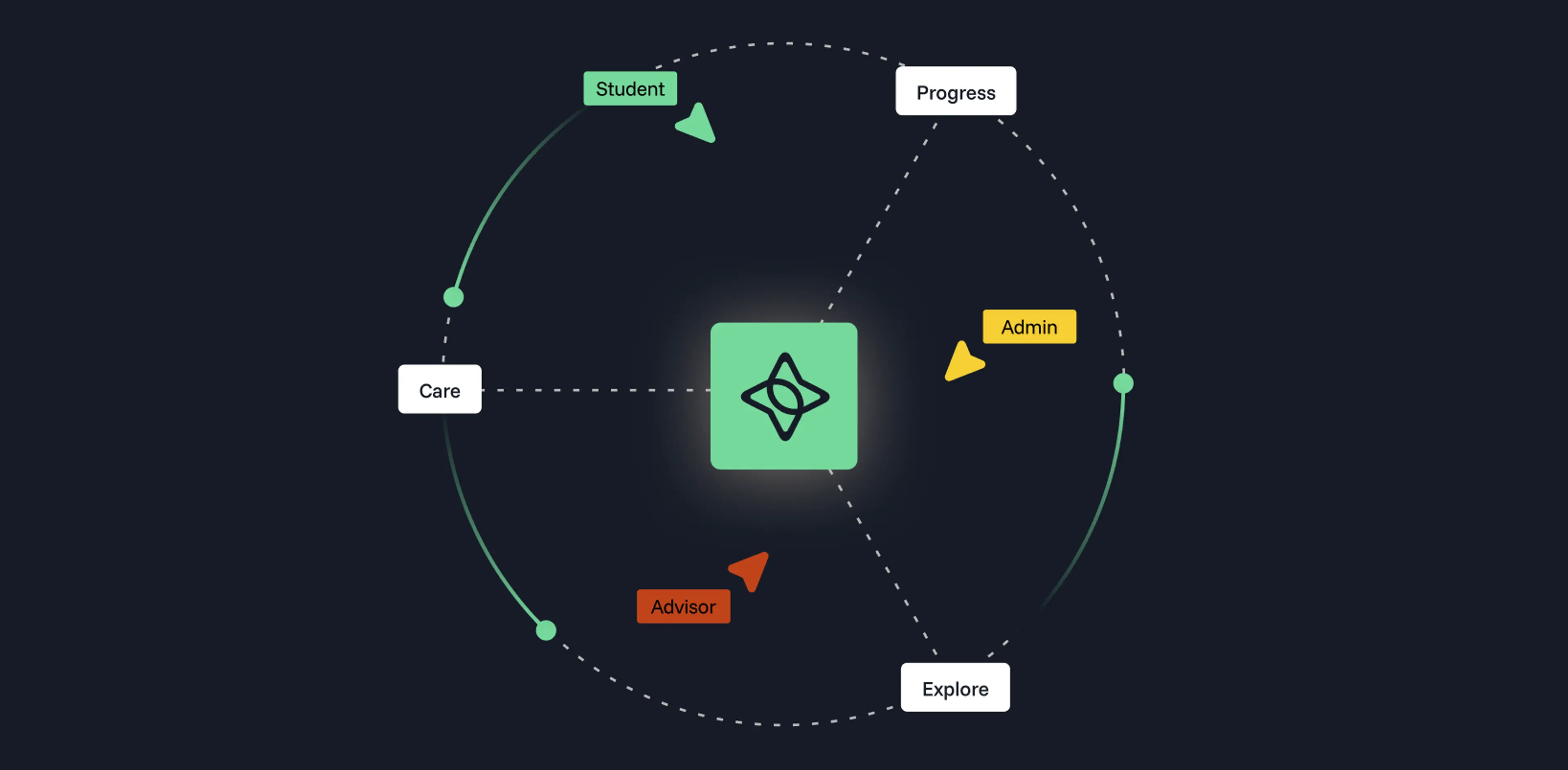
Many states also maintain statewide transfer frameworks, common course numbering systems, or guaranteed-admission pathways for students who complete a transferable associate degree. Ask your academic advisor which agreements apply to your specific school pairing and major. A tool like Stellic Explore is built to make these pathways visible, so a student can see exactly how each course maps to their destination degree before they enroll in it, rather than finding out after the fact.
Build a two-year plan and check it every term
Once you know your target and your articulation options, map all four semesters at once. Lay out which courses satisfy your associate degree, count toward your bachelor's major, and fulfill your target university's general education requirements at the same time. The best 2+2 courses do double or triple duty. Knowing how many credits a bachelor's and an associate degree require makes that mapping much easier.
Then treat the plan as a living document. Requirements change, courses get renumbered, and your intended major may shift. A quick check-in with an advisor each term, comparing your completed and planned courses against your target university's requirements, catches problems while there is still time to adjust. This is the same discipline behind good college degree planning generally, and it matters even more when two institutions are involved.
Arriving as a junior, not starting over
A well-planned 2+2 path is still one of the best deals in higher education: two years of lower tuition, a smoother academic ramp, and a bachelor's degree from a four-year university at the end. The students who capture that full value are the ones who plan their transfer from day one, lean on articulation agreements, and keep checking their progress against the destination rather than just the associate degree in front of them. That kind of clean handoff between two schools does not happen by accident.
If you work at a community college or a university and want to give transfer students that clarity from their first term, we would love to show you how Stellic maps these pathways. Request a demo and we will walk through it together.