Academic planning challenges don't announce themselves loudly. They accumulate quietly: a frustrated advisor here, a student who took five years to finish there, a transfer student who arrived with 60 credits and only counted 38. Over time, these aren't isolated incidents. They're symptoms of a system that was never built for how students actually learn and they're costing your institution students, resources, and reputation.
This diagnostic guide will help you identify exactly where your institution stands, what the warning signs mean, and what modern degree planner technology can do about each one.
Sign #1: Your Academic Advisors Spend More Time on Admin Than on Students
Ask your advising staff what percentage of their week goes to administrative tasks versus meaningful student conversations. If the answer is more than 40% on admin, you have a structural problem. The median advisor caseload is 296 students (reaching 600 at large institutions) and research from Tyton Partners found that advisors with the highest caseloads often have just 10 minutes per student meeting, barely enough time to assist with course registration, let alone provide proactive, holistic support. When advisors are consumed by manual tasks, the students who most need deeper guidance don't get it.
Modern degree planning technology automates degree audit tracking, flags unmet requirements in real time, and surfaces students who need attention without an advisor having to go looking. Stellic partners consistently report that students arrive to advising appointments with their plans already mapped out, which creates space for deeper, more meaningful conversations. If the audit itself is new territory, here's a primer on what a degree audit is and how to read one.
Sign #2: Only a Fraction of Your Students Graduate On Time
Only 41% of first-time, full-time college students earn a bachelor’s degree within four years, meaning the majority are taking longer than planned, often without understanding why. If your institution is below your peer benchmark, the first question worth asking is about planning infrastructure. Low graduation rates are almost always a planning problem in disguise. Students miss prerequisites. They take the wrong electives. They don’t realize a required course is only offered in the Fall until they’re a semester away from finishing. Without proactive alerts and real-time degree audit visibility, institutions find out after the damage is done.
Multi-year degree planning tools map every student’s path to graduation with real-time course availability, required sequencing, and early-alert flags when a plan puts a student at risk of extending their timeline. A modern degree planner acts as a GPS for your academic career, offering a visual map on a single dashboard. Creating a degree planner ensures that graduation requirements are met on time, and students should update their plans for upcoming terms and future terms to keep their academic path current and effective. The goal is for students to feel momentum toward graduation, not uncertainty about whether they’re on track.
Sign #3: Transfer Students Are Losing a Significant Share of Their Credits
Research shows transfer students lose an average of 43% of credits earned when changing institutions, roughly a full semester of time and tuition. If you don't know your own number, that's a sign in itself. Without an integrated transfer credit evaluation system connected to your degree planner, every credit decision is a manual judgment call. Credits get buried in general electives instead of fulfilling requirements, and word travels fast. A reputation for poor transfer credit articulation directly affects enrollment.
Santa Monica College, California's number-one transfer college to the UC system for 35 consecutive years, recognized that credit uncertainty was one of the biggest barriers slowing transfer students down, particularly students balancing work, family, and school, where that uncertainty can be the difference between moving forward and stepping away. Modern transfer planning tools show incoming students precisely which requirements their existing credits satisfy before they even enroll, turning a historically painful administrative process into a meaningful recruitment advantage.
Sign #4: Students Discover Degree Completion Blockers Too Late
How many students in the past year petitioned for a graduation exception or late substitution? More than a handful signals a systemic gap, not a student problem. Only 57% of students who expect to graduate say they’ve received clear guidance on course sequencing. Research from the University of New Mexico found that more than 90% of students graduate with excess credits, with half finishing at least 26 credits beyond what is required. Students aren’t choosing to do this, they simply lack real-time visibility into what counts and what doesn’t.
An audit-aware planner updates in real time as students add, drop, or change courses, so plans always reflect real requirements, prerequisites, and constraints. A good degree planner will also automatically recognize prerequisites and organize requirements into categories such as general education, major, and minor, making it easier for students to navigate and plan their academic progress.
Sign #5: Your Degree Audit and Degree Requirement Data Lives in Multiple Places
Could any student at your institution get a 100% accurate, real-time answer to "what courses do I still need?" from a self-service tool right now, without talking to an advisor? If not, data fragmentation is quietly driving planning errors. When course requirements live in one system, registration data in another, and transfer credit evaluations in email threads, inconsistency is inevitable. Students get different answers from different staff. Academic advisors spend time verifying data rather than using it.
A modern degree planning platform integrates with your SIS and other data sources to give students, advisors, and administrators one consistent, accurate picture of academic progress updated in real time. Students at The University of Texas Permian Basin have made more than 20,000 planning decisions in Stellic to date, enabled by that kind of clarity.
Sign #6: Your Scheduling Team Can't See Course Demand in Advance
Does your institution use aggregated degree plan data to forecast course demand before scheduling decisions are finalized? If future plans are locked in offline spreadsheets or disconnected tools, your registrar and scheduling team are effectively flying blind. Students who need a required course can't get in. Sections get added too late. And because the data isn't visible in advance, the problem repeats every semester.
When students actively build and update multi-year plans in a modern degree planner, institutional leaders can see demand for required courses 12 to 18 months out and build a schedule that reflects actual student need rather than last year's enrollment patterns. This is one of the core reasons large institutions choose Stellic: high student adoption means the planning data is accurate enough to act on.
Sign #7: Exception Requests Are Managed Through Email and Manual Workflows
How long does a typical course substitution request take to resolve at your institution? More than five business days is a problem. No clear answer is a bigger one. Manual exception handling creates inequity: students who know how to navigate bureaucracy get faster, more favorable outcomes and students who don't fall behind. The process is also invisible to anyone not directly involved, which means errors and inconsistencies compound over time.
Built-in exception management workflows route requests to the right approvers, maintain a documented audit trail, and communicate status back to the student automatically. Stellic partners consistently describe this as a meaningful shift both in operational efficiency and in equity for students who previously had no visibility into where their request stood.
Where Does Your Institution Stand?
- 0 to 2 signs identified: Planning infrastructure is mostly working. Targeted enhancements may be all you need but it's worth validating that assumption with data.
- 3 to 4 signs identified: Fragmentation is measurable and actively limiting academic advisor effectiveness and student outcomes. The cost of inaction is growing.
- 5 to 7 signs identified: Modern degree planning technology isn't a nice-to-have. Every semester without it extends student timelines, strains advisors, and produces data blind spots that can't be fixed with workarounds.
The Cost of Waiting
Degree planning breaks down when it's disconnected, short-term, or built on assumptions. Students struggle to understand what's possible. Advisors lack visibility into whether plans are on track. Registrars react to demand too late. These risks translate directly into tuition revenue, retention rates, and institutional reputation.
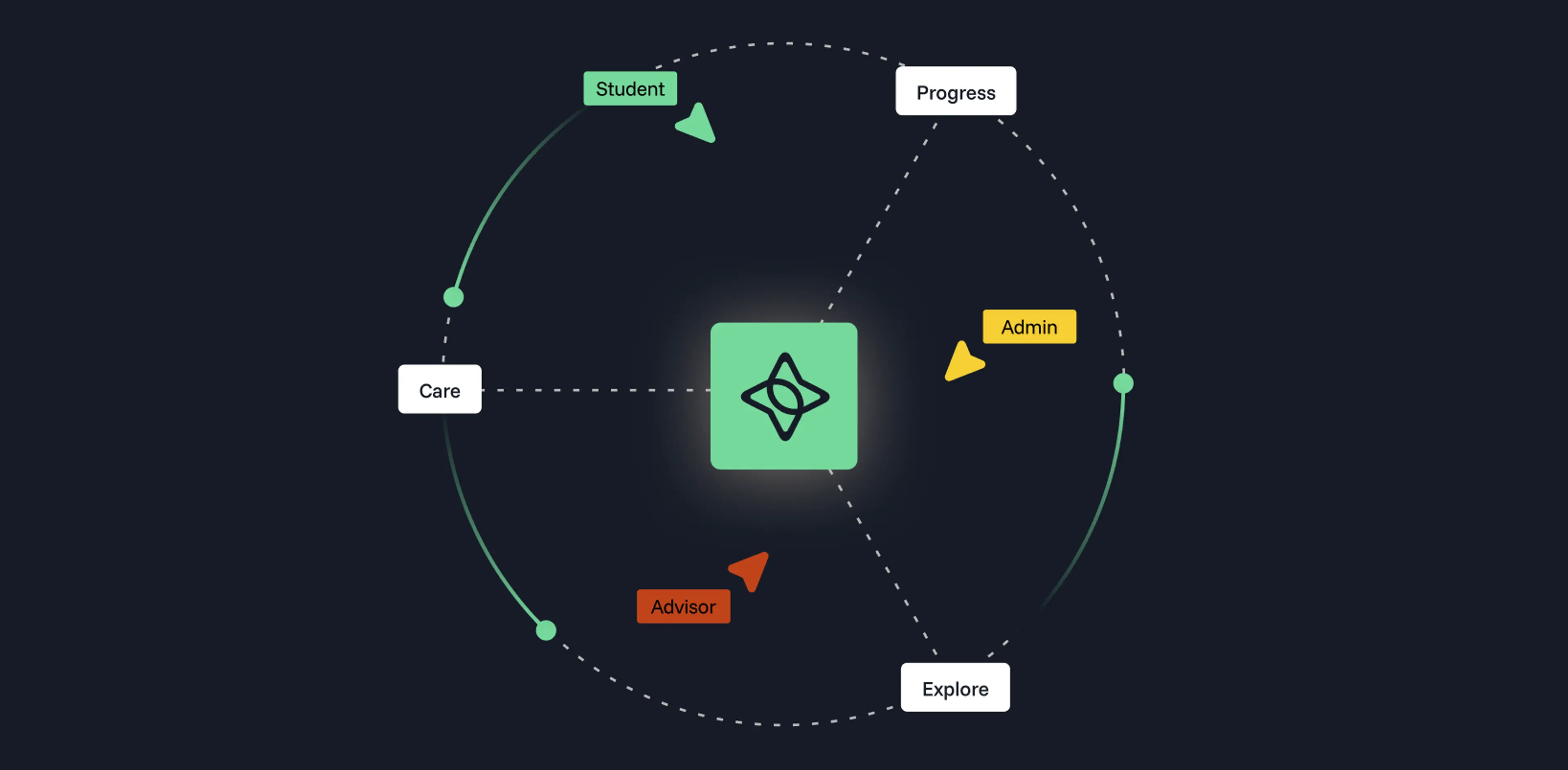
More than 100 institutions, including The Ohio State University, Columbia University, Santa Monica College, Colorado College, and Florida State University, have modernized their academic planning experience with Stellic, a unified degree management platform that integrates degree audit, planning, registration, transfer management, and advising into a single, student-centric system.
The question isn't whether your institution needs better degree planning technology. It's whether you're ready to act before the costs compound further.
Curious Where You Stand?
If any of these signs feel familiar, we'd love to chat. You can request a Stellic demo to start the conversation about where things are today and where we might be able to help.