The email usually arrives right after grades post, and the subject line alone is enough to ruin a week: "Financial Aid Warning" or, worse, "Notice of Financial Aid Suspension." If you just got one of these, take a breath. The three SAP statuses mean very different things, and only one of them stops your aid. A financial aid warning is a one-term grace period where your aid continues while you get back on track. Probation is the status you receive after a successful appeal, with your aid restored under conditions. Suspension means your eligibility has been paused until you either appeal or bring your record back above your school's standards.
This guide walks through where these statuses come from, what each one requires of you, and the realistic paths back to good standing.
Where the statuses come from: SAP checks
Every school that awards federal student aid is required to measure whether you are making satisfactory academic progress, usually shortened to SAP. Most institutions review three numbers. There is a GPA standard, commonly a 2.0 minimum for undergraduates. There is a completion rate, often called pace, which many schools set at 67% of attempted credits. And there is a maximum timeframe, which federal rules cap at 150% of your program's published length, so a 120-credit degree has to be finished within 180 attempted credits. The Federal Student Aid overview of SAP lays out how these standards work, and our guide to what satisfactory academic progress means covers them in more depth.
Fall below any one of those thresholds at review time and your school assigns you a status. Which status you get, and what it lets you do next, depends on how far along the process you are. For the detail behind each threshold, our guide on how SAP is measured walks through the GPA, pace, and maximum-timeframe math.
Financial aid warning: aid continues while you recover
A warning is the gentlest outcome, and if your school evaluates SAP at the end of every payment period, it is typically the first one you will see. During a warning term your financial aid keeps paying out as normal. You do not need to file an appeal or submit paperwork. The deal is simple: you have one term to bring your GPA and completion rate back above the line.
Treat the warning term seriously, because it is the cheapest recovery window you will get. Meet with your advisor early, be realistic about your course load, and use the term to repair the specific number that slipped. Students who wait until week ten to look at their standing usually discover the math no longer works for that term, and the next status on the list is much less forgiving.
Financial aid suspension: eligibility is paused
If the warning term ends and your record is still below standard, or if your school evaluates SAP annually and skips the warning step entirely, you move to suspension. Some schools call it financial aid disqualification or termination, but the effect is the same: federal aid stops until something changes. Suspension sounds permanent, so it is worth saying plainly that the process is designed with ways out.
You have two realistic paths back. The first, offered at nearly every school, is a SAP appeal: a written explanation of the circumstances that disrupted your academics, what has changed, and how you plan to recover. Schools accept appeals for situations like serious illness, a death in the family, or other events outside your control. The second path is to enroll without aid for a term, often at reduced load or lower cost, and raise your numbers above the threshold on your own. It is slower and more expensive, which is why the appeal is almost always worth attempting first. Retaking coursework to recover runs into its own federal limit, explained in how many times you can retake a class.
Financial aid probation: the conditional comeback
Probation is the status most students misunderstand, because in everyday language it sounds like a punishment. In financial aid terms it is good news. Probation is what your school grants when your appeal is approved: your aid is reinstated for the probationary term while you work your way back to good standing. For how these aid statuses differ from your college's own academic standing, see academic probation vs. financial aid probation.
Probation usually comes with conditions. If your school determines you can return to standard in a single term, you get that term to do it. If the math requires longer, the aid office will place you on an academic plan, a term-by-term roadmap of GPA and credit milestones you agree to hit. As long as you meet the plan each term, your aid continues even though your cumulative numbers are still recovering. Miss the plan's milestones and you are generally back to suspension, this time with a much harder appeal to win. Pell recipients should also know about their separate lifetime limit, explained in Pell Grant lifetime eligibility used.
What these statuses mean for institutions
For registrars, financial aid officers, and advisors, every one of these statuses represents a student who was struggling for at least a full term before anyone was required to act. The reality is that the SAP review is a lagging indicator. By the time a warning letter goes out, the difficult term is already on the transcript.
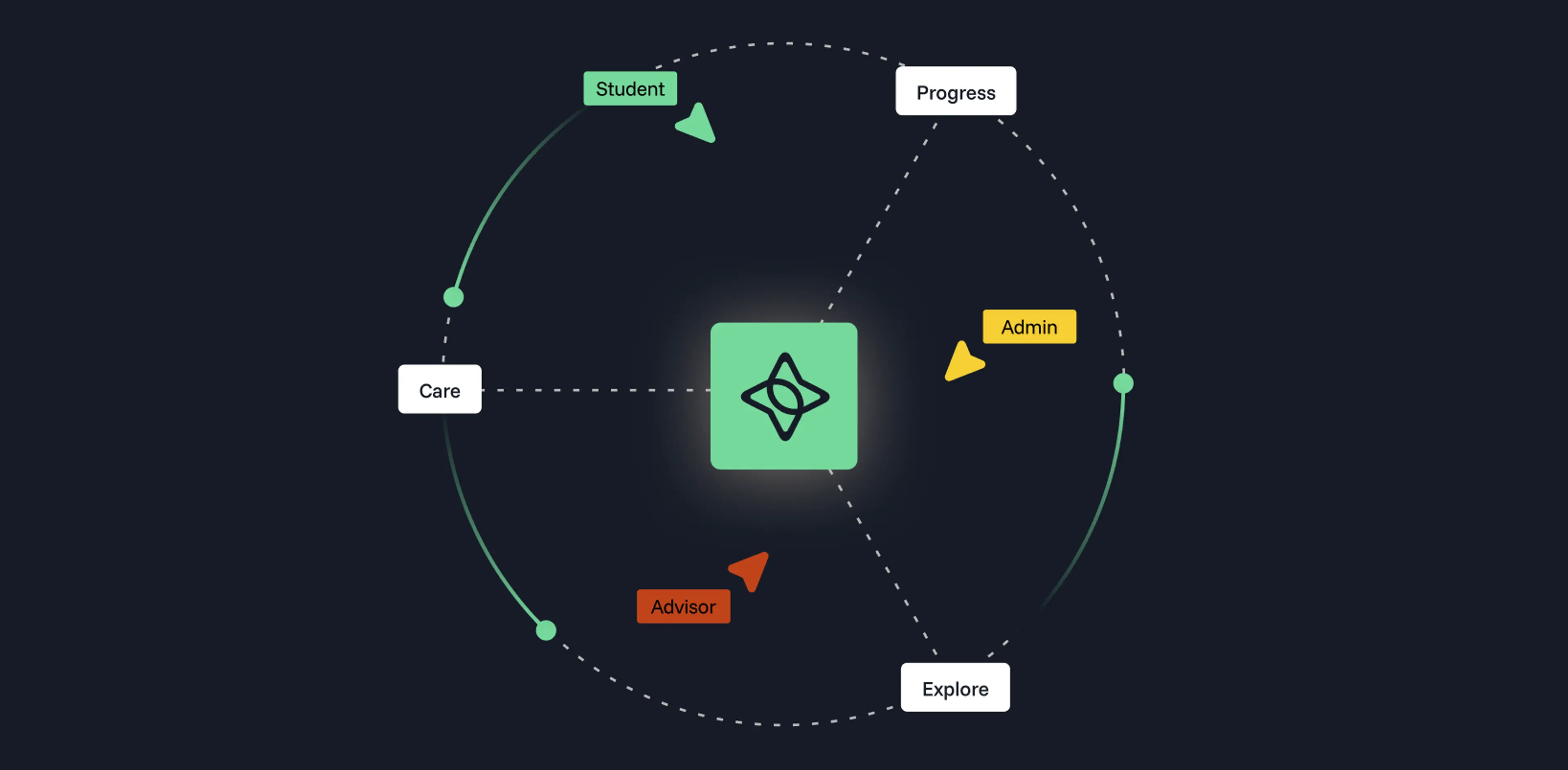
Institutions that get ahead of this connect academic progress data to advising outreach, so a student trending toward a 1.9 GPA or a slipping completion rate gets a conversation in week five rather than a form letter in week sixteen. That early visibility is exactly what Stellic's Care gives advising and registrar teams, and it means the SAP conversation can happen while there is still time to change the outcome.
The way back is built into the process
Warning, probation, and suspension each describe a different point in a process that expects students to recover, and most do. Students who read the letter carefully, learn which specific standard they missed, and act during the earliest window available tend to come through with their aid and their degree intact.
If you work in financial aid, advising, or the registrar's office and want to see how institutions spot SAP risk before the letters go out, we would be glad to show you. Request a demo whenever you are ready.
When an appeal is the right move, our step-by-step SAP appeal letter guide covers what to write and what documentation helps.