Student retention continues to be one of the most pressing challenges facing higher education today. To retain students and improve student retention, higher education administrators must address diverse student needs through comprehensive support. With enrollment pressures mounting and completion rates under scrutiny, colleges and universities need modern student retention strategies that address the full spectrum of student needs, from initial enrollment through graduation.
The most effective retention efforts don’t rely on isolated interventions. Instead, they create connected ecosystems where data, planning, and support services work together to keep students engaged and on track. Poor retention rates and student attrition, including student departure, can significantly impact institutional reputation, funding, and overall student satisfaction. High dropout rates also prove costly for institutions, which lose out on tuition and fee revenue when students stop out.
Creating a strong sense of community and belonging is essential for long term student success. Institutions that excel in student retention recognize that effective strategies must be timely, scalable, and sensitive to diverse student needs to increase student retention. Here are five student retention strategies that institutions we work with are using to strengthen student success.
1. Re-Engaging Students on Leave: Win-Back Strategies That Work
One of the most overlooked student retention strategies involves students who have already left: those on leave of absence or who have withdrawn. Helping students stay enrolled and supporting student persistence is critical for institutional stability and long-term success. These students represent a significant opportunity for institutions committed to improving completion rates, yet many schools lack effective systems for maintaining connections with them, which can ultimately impact the total number of students enrolled. Many of them are still enrolled somewhere, which is why persistence rate and retention rate tell you different things about the same cohort. Our guide to bringing stopped-out students back looks at the same problem from the other end, once a student has already left.
Students who step away from their studies often do so temporarily due to financial pressures, family obligations, or health concerns. To improve retention, it is essential to identify students who are at risk of leaving and use personalized communication tailored to their individual needs, making them feel valued and supported. Once removed from active registration systems, these students can quickly lose their connection to the institution. Without the right technology in place, advisors lose visibility into their academic progress, making it nearly impossible to conduct meaningful outreach or provide clear pathways back to completion. Maintaining connections with students who have left can help increase the number of students enrolled and support their return to academic persistence. Financial pressure often surfaces first as a Satisfactory Academic Progress problem; our guide covers what SAP is and how students keep it.
What to Look for in Technology
Supporting technology should maintain complete visibility into student records even after withdrawal or leave status. Look for platforms that:
- Preserve advising access to degree plans, progress audits, and historical notes for non-active students
- Enable advisors to export or review degree audits that show remaining requirements and credits toward completion
- Support “what-if” scenario planning to identify alternative completion pathways or stackable credentials
- Facilitate targeted outreach campaigns based on proximity to completion
- Allow advisors to identify near-completers who may need only a few courses to earn a credential
The goal is to transform win-back efforts from generic re-enrollment campaigns into personalized, data-informed conversations about realistic paths to completion. When advisors can see exactly what a student needs to finish, whether it’s their original program or an alternative credential, they can make compelling cases for return.
2. Early Alert Systems: Connecting Faculty Insights with Coordinated Support
Among the most impactful student retention strategies are early alert systems that transform faculty observations into coordinated interventions. Early alert systems can significantly improve student retention rates by identifying academic difficulties and influencing a student's decision to persist through timely support. Faculty members are often the first to notice when students struggle with attendance, engagement, or academic performance, but without structured systems to capture and act on these insights, critical opportunities for early support are lost.
The challenge isn’t just collecting faculty feedback. It’s creating workflows that ensure this information reaches the right people and triggers timely, appropriate interventions. Gathering and acting on student feedback continuously is also essential for improving retention strategies and boosting student satisfaction. When teams use the same systems and work from the same information, collaboration becomes easier and trust grows. Regular check-ins and milestone celebrations are effective ways to help students navigate challenges and reduce student attrition. Shared processes help teams understand each other’s perspectives, creating a safer environment for addressing challenges and making decisions together.
What to Look for in Technology
When evaluating advising platforms, prioritize systems that:
- Enable faculty to submit progress concerns directly through intuitive interfaces
- Support configurable review cycles for specific student populations or high-risk courses
- Send automatic reminders to faculty to ensure high participation rates
- Make instructor feedback immediately visible to assigned advisors
- Allow advisors to create referrals, document interventions, and track outcomes within student records
- Provide administrators with consolidated reporting on flagged students and intervention completion rates
- Include dashboards that surface open referrals and prioritize follow-up actions
The most effective systems don’t just collect data. They create accountability structures that ensure every alert receives appropriate attention. Connected workflows help eliminate duplicative processes and reduce manual work. When processes are easier to manage and follow, staff can operate more efficiently and devote more attention to meaningful student support.
3. Strategic Course Scheduling: Using Demand Data to Remove Completion Barriers
Course availability represents one of the most significant structural barriers to on-time graduation, making demand-responsive scheduling a critical component of student retention strategies. Strategic scheduling not only ensures that required courses are available, but also helps students progress and navigate their academic journey by reducing conflicts and supporting timely completion. When required courses are full, unavailable, or scheduled at conflicting times, even highly motivated students can be forced off track, extending time to degree and increasing the likelihood of stopout.
Traditional course scheduling often relies on historical enrollment data and faculty availability rather than forward-looking student demand. This reactive approach can create bottlenecks in critical courses, particularly in major requirements or general education sequences where large numbers of students need access simultaneously. Attending classes is essential for student engagement and retention, and flexible scheduling (such as offering virtual participation or varied class times) can help more students attend classes consistently. Personalized learning pathways can further guide students toward their academic objectives while accommodating their unique needs and constraints, supporting both their ability to attend classes and their overall success.
What to Look for in Technology
Modern course planning platforms should provide actionable demand analytics that inform proactive scheduling decisions. Essential features include:
- Real-time visibility into which courses students have planned for upcoming terms
- Demand forecasting based on degree plans, program requirements, and student cohorts
- The ability to filter demand data by program, college, or specific student populations
- Tools to identify high-demand courses that would benefit from additional sections or alternative scheduling formats
- Messaging capabilities to communicate directly with affected students about course availability
- Analytics that connect course access issues to retention and progression outcomes
If departments and registrars can see student demand before registration opens, they can add sections strategically, adjust scheduling to minimize conflicts, and ensure that critical gateway courses remain accessible. This approach removes a major friction point in the student experience and demonstrates institutional commitment to on-time completion.
4. Integrating Academic Support: Making Resources Visible and Measurable
The availability of academic support services, including tutoring, mentoring, academic coaching, and supplemental instruction, often distinguishes institutions with strong retention from those that struggle. Peer support programs, mentorship programs, and student organizations play a crucial role in fostering student belonging, a sense of belonging, and social integration, key factors in student retention. Student leaders are instrumental in connecting new students, supporting campus life and college life, and helping them navigate resources and build relationships from the start.
Effective student retention strategies ensure that support services are integrated directly into the advising ecosystem rather than existing as separate, hard-to-find resources. Engaging students early in their academic journey and creating awareness around events, groups, and clubs enhances their sense of belonging and improves retention. Regularly gathering student feedback also helps institutions understand student needs and improve community engagement. This integration serves two critical purposes: it increases student utilization of valuable supports, and it enables institutions to measure which services actually improve persistence and performance.
What to Look for in Technology
Advising platforms should bridge the gap between academic advising and support services by providing:
- Integrated referral systems that allow advisors to connect students with specific support services directly from student profiles
- Tracking mechanisms that document which students received referrals and whether they engaged with recommended services
- Dashboards that surface open referrals, upcoming appointments, and required follow-up actions
- The ability to link support service utilization data with retention and performance outcomes, which is a key advantage of modern advising technology
- Messaging tools that enable targeted outreach about available resources based on course enrollment or performance indicators
A comprehensive retention strategy leverages these features to create holistic student support services that boost student success. Holistic student support services integrate mental health counseling, financial aid coaching, and academic advising into one framework to remove barriers to persistence. Advisors can make warm handoffs to tutoring or coaching services, track whether students follow through, and adjust their recommendations based on what works. This visibility transforms support services from optional add-ons into integral components of student success.
5. Predictive Analytics: Connecting Insights to Intervention
Predictive analytics has become increasingly central to institutional student retention strategies, offering the promise of identifying at-risk students before they withdraw. Higher education leaders are leveraging predictive analytics to improve college student retention and student outcomes by proactively identifying students who may need additional support. However, many institutions struggle to translate predictive models into actionable interventions. The insights often remain trapped in institutional research offices or separate analytics platforms, disconnected from the daily work of advisors.
The real value of predictive analytics emerges when risk indicators are integrated directly into advising workflows, enabling advisors to prioritize outreach and tailor interventions based on data-informed understanding of student needs. Technology can enable institutions to scale personalized approaches by using data analytics to deliver targeted, relevant messages, helping students feel supported and connected rather than overwhelmed by generic announcements. These approaches can improve student retention by making students feel valued and understood, ultimately strengthening engagement and academic success.
What to Look for in Technology
Platforms that successfully operationalize predictive analytics typically include:
- The ability to export comprehensive student data (degree plans, progress audits, engagement metrics) to support institutional model development
- Integration capabilities that bring risk scores or persistence indicators back into advisor-facing interfaces
- LMS data integration that provides advisors with holistic views of academic engagement alongside degree progress
- Filtering and search functions that allow advisors to identify and prioritize outreach to high-risk students
- Documentation tools that link specific interventions to student outcomes, enabling continuous improvement of support strategies
By leveraging predictive analytics, institutions can identify at-risk students early, boost student retention, and improve student retention rates through targeted interventions and proactive support. The most sophisticated implementations go beyond simply flagging at-risk students. They help advisors understand why students are at risk and suggest evidence-based interventions aligned with specific risk factors. This level of integration transforms predictive analytics from interesting information into a practical tool for improving retention.
Building a Connected Campus to Improve Student Retention
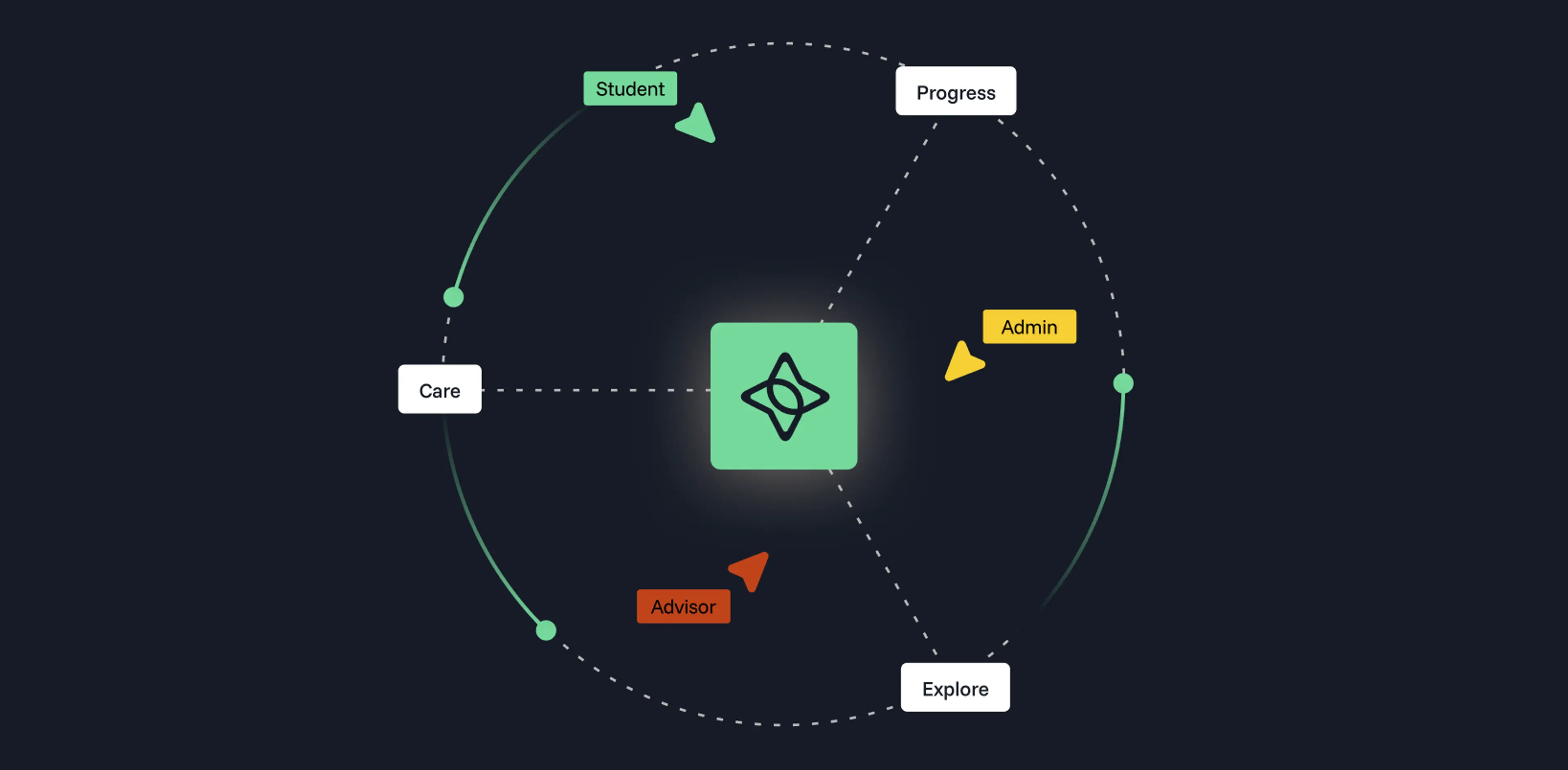
The most effective student retention strategies share a common characteristic: they don't exist in isolation. Instead, they work together as part of a connected ecosystem where data flows seamlessly between systems, insights trigger coordinated responses, and every member of the campus community has the information they need to support student success.
This connected approach requires technology platforms that unify degree planning, academic advising, early intervention, and analytics in a single environment. When advisors can see the complete picture (degree progress, risk indicators, faculty concerns, support service engagement, and course planning), they can provide more proactive, personalized support that directly addresses the factors that influence persistence.
Breaking through academic boundaries and allowing previously trapped data to flow freely creates powerful change. When advisors can easily share context, when requirements are clear, and when information moves instead of getting stuck, the student experience changes in meaningful ways. Students can see what's ahead, make confident decisions, and take ownership of their paths.
Institutions looking to evaluate their own readiness for this kind of work can start with a cross-departmental collaboration assessment.
These five student retention strategies represent real approaches our partner institutions are using to strengthen completion outcomes. Platforms like Stellic bring together these essential capabilities in one collaborative environment, helping institutions move from disconnected initiatives to coordinated, campus-wide systems of support. If strengthening retention and graduation rates is a priority for your institution, we'd love to discuss how these strategies might work in your context.
To put numbers behind these strategies, start with how student retention rate is calculated and benchmarked.
Proactive outreach depends on catching warning signs early, which is exactly what early alert systems are built to surface.