Getting into college was the milestone everyone celebrated. For a first-generation student, it can also be the moment the map runs out. No parent to explain what office hours are for, no sibling who already learned that you have to file the FAFSA every year, no family shorthand for words like "prerequisite" or "bursar." The hard part is usually navigational: making sense of a system that quietly assumes you already know how it works.
First-generation students, those whose parents did not complete a four-year degree, make up more than half of all undergraduates in the United States, about 54 percent, according to FirstGen Forward (formerly the Center for First-generation Student Success, a NASPA initiative). They arrive with real strengths: resilience, motivation, and a clear sense of why the degree matters. What they need from an institution is help turning access into a diploma, and that support looks different from the generic version campuses often default to.
Access is the start, not the finish line
Enrolling a diverse class feels like the win, and it absolutely. But first-generation students graduate at lower rates than their continuing-generation peers, a gap that shows up in national data year after year. The reasons usually trace back to the hidden curriculum of college: the unwritten rules that continuing-generation students absorb at home and first-gen students are left to decode on their own.
Here's the reality: a student who doesn't know that a "hold" on their account will block registration can lose an entire enrollment window before anyone explains it. Closing the completion gap starts with recognizing that access without navigation support quietly reproduces the very inequity the institution hoped to fix.
Making the invisible rules visible
The most useful thing a campus can do is stop assuming knowledge. Clear degree maps, plain-language explanations of requirements, and a single place to see what's done and what's left take a huge cognitive load off students who are figuring it out alone. When a student can see their whole path to graduation, they spend less energy decoding the system and more on the actual coursework.
This is where transparent degree planning makes a real difference. A student who can view every requirement, see how a dropped course ripples into future semesters, and understand exactly what stands between them and a diploma is a student who can advocate for themselves. Tools don't replace mentorship, but they remove the guesswork that first-generation students are so often left to shoulder privately.
Proactive outreach beats waiting for the knock
Many first-generation students won't ask for help, sometimes because they don't want to seem like they don't belong, sometimes because they don't know help exists. Waiting for them to show up at the advising office means missing the ones who need support most. Campuses that reach out first, checking in when a grade slips or a deadline passes, catch problems these students might never have raised on their own.
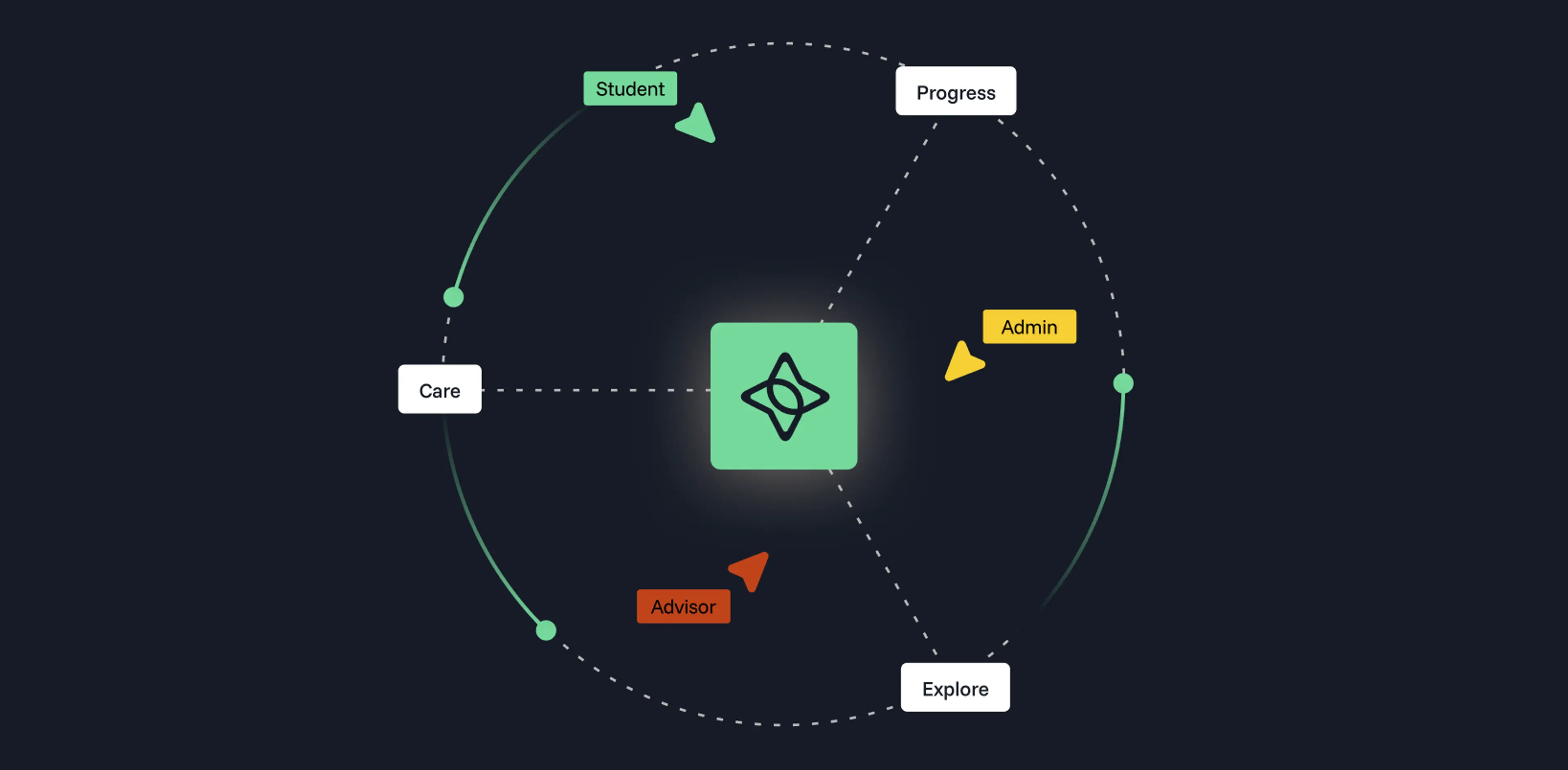
That proactive posture, supported by tools like Stellic's Care, signals something powerful to a first-generation student: you belong here, and we're paying attention. Belonging turns out to be one of the strongest predictors of whether a student stays enrolled, which makes that signal a lot more than a nicety.
Building a culture, not just a program
One-off orientation sessions and a single first-gen mentor can't carry the weight alone. The institutions that move the completion needle weave support into everyday operations, so that advisors, faculty, and financial aid staff all understand the specific hurdles these students face. When the whole campus shares that awareness, a first-generation student stops having to find the one person who gets it.
That kind of coordinated support doesn't happen by accident. It takes shared information, clear ownership, and a commitment to meeting students where they are rather than where a traditional model assumes they should be.
The bigger picture
Supporting first-generation students well is one of the clearest ways an institution can live up to its mission. These students often become the family members who show the next generation that college is possible, so every completion echoes far beyond a single graduation ceremony. Helping them cross the finish line is both the right thing to do and one of the highest-leverage investments a campus can make.
If you're thinking about how to better support first-generation students on your campus, we'd love to compare notes. Request a demo and we'll show you what student-first navigation can look like.