It usually surfaces in the spring of senior year. A student sits down with an advisor to confirm the last term is set, and a category nobody has thought about since orientation is sitting there unfinished. Humanities, maybe, or quantitative reasoning. The major is done and the credits are all there, yet one line in a list of categories is still open, and clearing it now costs a summer term.
General education requirements are the courses every student at an institution must complete outside their major, spread across defined subject areas such as writing, mathematics, natural science, humanities, and social science, so that everyone who graduates shares a common base of academic breadth.
That definition is the easy part. The more useful question is how something this straightforward ends up unsatisfied in a student's final year, and the honest answer is that it rarely happens because someone forgot to register. Four specific mechanics do most of the damage.
What Lives Inside the Gen Ed Block
Campuses call this block different things. You'll see core curriculum, distribution requirements, breadth requirements, liberal arts requirements, or just gen ed classes, and each label carries a slightly different philosophy about what breadth is for. The mechanics underneath tend to look alike: a set of categories, a credit minimum or course count attached to each one, and an approved list of courses that satisfies it.
Community colleges often design their general education courses with a four-year transfer partner in mind, which changes how the categories get drawn in the first place. Your catalog and your degree audit are the only authoritative sources for your own requirements. A friend at another school is describing a different rulebook.
Double Counting Courses Has Limits
Picture a student who finds one course sitting on two approved lists, a history class that appears under both humanities and global perspectives, and reasonably assumes it will clear both. Plenty of institutions cap how much double counting they allow within the gen ed block, and some prohibit it outright. Others will let a single course satisfy a gen ed category and a major requirement at the same time while refusing to let it clear two gen ed categories.
The reasoning behind those limits is sound, since a student who double counted freely could finish the block with a fraction of the exposure faculty intended. The practical problem is that the limits live in catalog footnotes almost nobody reads closely, so students build multi-year plans on an assumption that was never true at their school. If you are counting on one course to do double duty, get confirmation from your advisor before you register.
When Transfer Credit Lands as Elective Credit
This one is frustrating because the credit did transfer. The course is on the transcript and the hours are in the total, so a quick glance at the numbers looks perfectly healthy. What happened underneath is that the receiving institution mapped the course to general elective credit, which adds hours without filling the gen ed category you were counting on.
If you're bringing credit in from anywhere, read how transfer credit equivalency works before you assume a category is covered.
Catalog Year Drift
At most schools, your catalog year decides which version of the rules governs you, and a course's gen ed designation can change from one catalog year to the next. Check designations against your own catalog year rather than the listing posted on the current website, or you can talk yourself into a course that does nothing for your block.
Having the Credits Without Having the Distribution
A student can be comfortably ahead on total credit hours and still be short a full category, because the accumulated hours and the distribution across categories are measured independently. The two can disagree quietly for years, especially when the thing a student watches each term is a single overall completion percentage inching upward.
Your degree audit separates those two measures, category by category, with the open ones called out, and looking at it that way at registration time takes a few minutes.
Finding the Gaps While There's Still Time
An unmet gen ed category in senior year is almost always the product of rules working exactly as written. Double counting limits, transfer equivalency, catalog year governance, and category-level distribution are genuinely intricate, and they tend to be documented in places a nineteen-year-old building a schedule will never think to look. Students who avoid the surprise are the ones who got a clear view of their own requirements early and kept checking it.
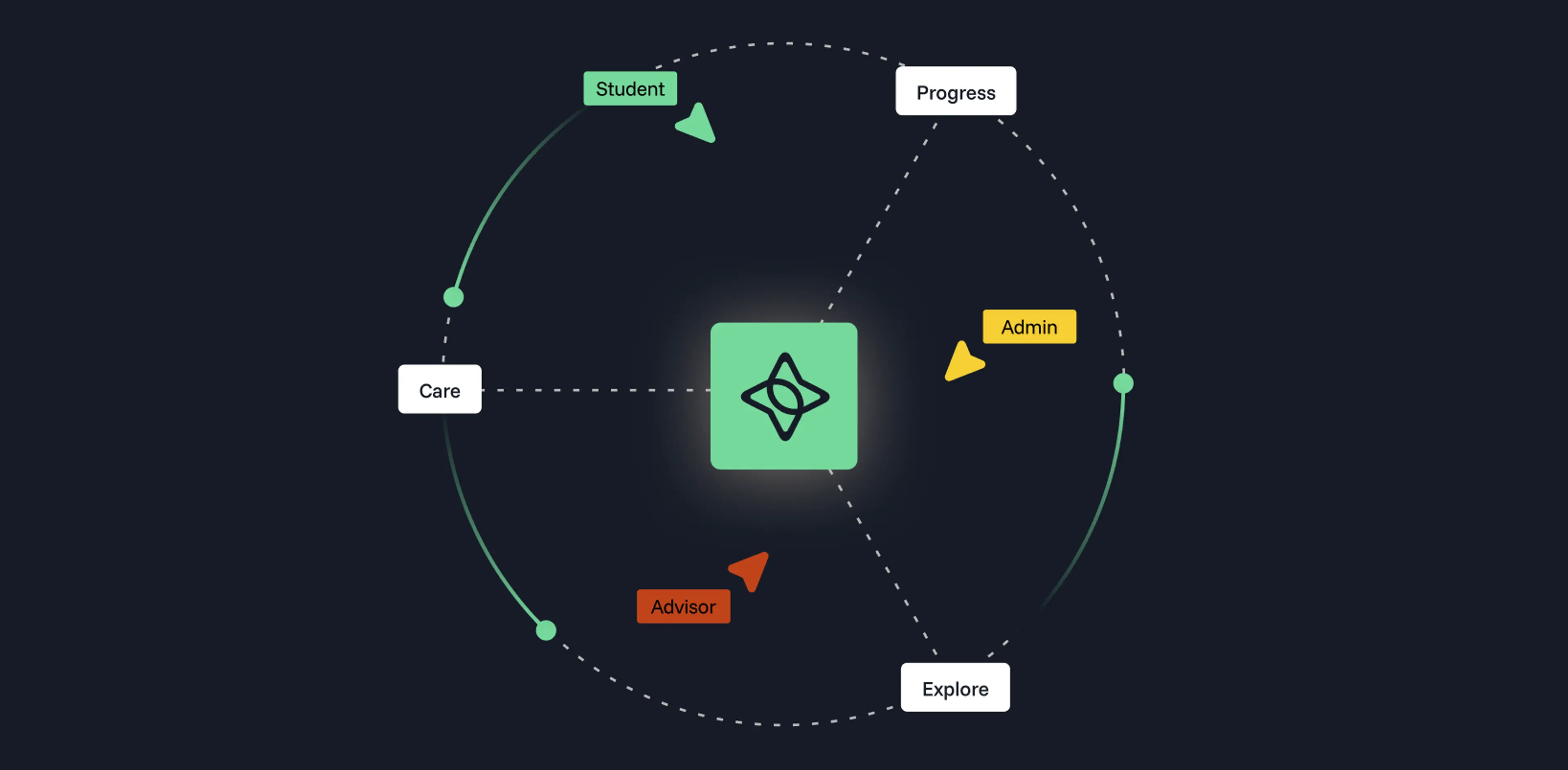
All of which is an argument for making requirements visible and legible to students in the first place. Stellic's Progress gives a live, category-level picture of what's satisfied and what's still open, so a gap surfaces in year one while it's cheap to fix. If you'd like to see what that looks like on your campus, request a demo and we'll walk through it with you.